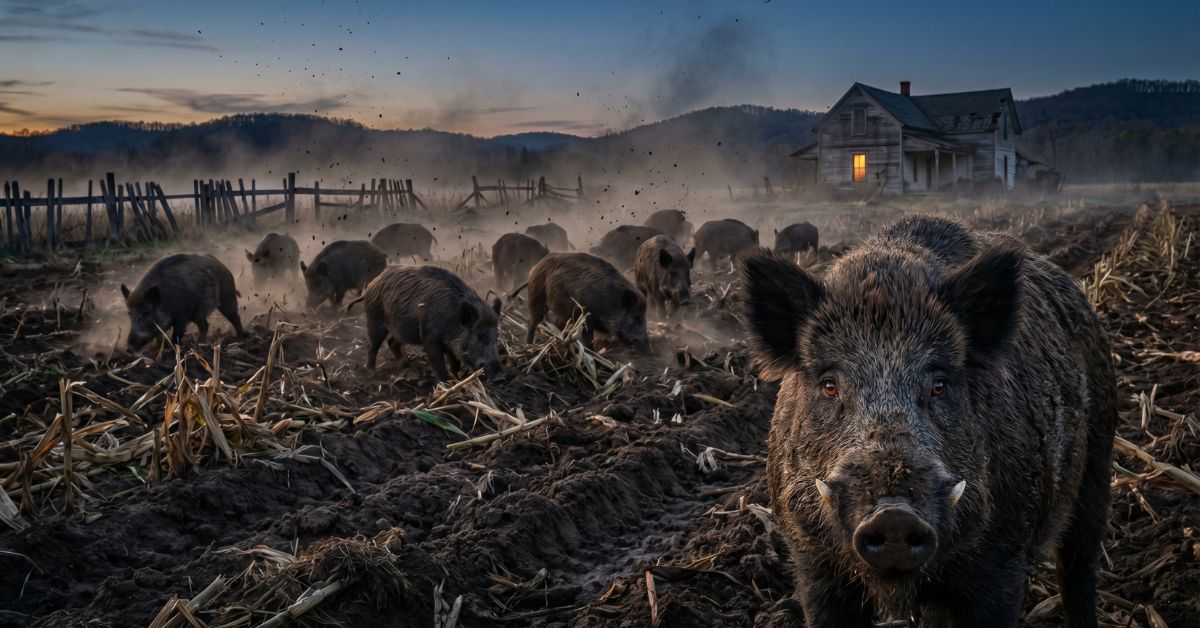
The feral hog population in the United States is estimated to be between 6 and 8.9 million individuals, distributed aggressively across at least 35 states. Capable of doubling their population every four months under optimal environmental conditions, these intelligent, opportunistic omnivores demand a profound paradigm shift in management philosophy. For decades, property owners and local municipalities relied on uncoordinated recreational hunting to manage localized populations. However, comprehensive biological data and longitudinal field outcomes indicate that recreational hunting is not merely ineffective; it actively exacerbates the crisis by fragmenting populations and educating survivors. Protecting rural property, delicate ecosystems, and commercial agricultural assets now requires transitioning away from recreational mitigation toward systematic, technologically advanced eradication strategies. This approach must be anchored in whole sounder removal, the deployment of chemical toxicants, strict biosecurity protocols, and integrated structural habitat management.
Economic and Ecological Impact Analysis
The economic devastation inflicted by feral swine is staggering. Updated conservative estimates derived from nationwide damage assessments indicate a minimum annual cost of $3.4 billion associated with wild pig invasions in the United States. Other institutional analyses, such as ongoing research by the United States Department of Agriculture (USDA) Animal and Plant Health Inspection Service (APHIS), place direct agricultural damages and control costs at approximately $2.5 billion annually. The sheer scale of this damage is driven by the animal’s highly destructive physical behaviors, primarily their rooting, trampling, and wallowing, which severely disrupt soil integrity and hydrology.
Feral hogs inflict direct and catastrophic damage on a wide variety of field crops, including sugarcane, corn, grain sorghum, soybeans, wheat, oats, peanuts, rice, melons, and pumpkins. The rooting behavior, wherein hogs actively turn over sod and pasture to expose the tender roots of plants, grubs, and soil invertebrates, systematically destroys pastures. This disturbance not only kills desired native plant species and encourages the proliferation of invasive, undesired weed species but also creates severe ruts and rises across the landscape. These topographical disruptions make it exceptionally challenging, and sometimes mechanically impossible, for a farmer to drive a tractor over the field to harvest hay or crops, resulting in millions of dollars in harvest disruptions and equipment damage.
| Category of Economic Loss | Estimated National Cost (in Millions USD) | Primary Mechanism of Damage |
| Property Damage (Livestock & Crops) | $477.9 | Destruction of physical infrastructure, irrigation lines, trellises, netting, fencing, and vehicular collisions. |
| Feral Hog Control Costs | $474.1 | Capital expenditures on advanced traps, ammunition, toxicants, sensors, and professional labor. |
| Crop Production Losses | $203.1 | Direct consumption, trampling, and systematic uprooting of maturing plants. |
| Pasture Losses | $192.9 | Rooting damage, destruction of forage, and the encouragement of invasive weed species. |
| Planting Changes & Foregone Income | $121.8 | Abandonment of high-yield crops due to the prohibitive risk of hog depredation. |
| Predation and Disease Losses | $85.0 | Direct predation on vulnerable calves, lambs, and birthing adults; transmission of pathogens. |
| Harvest Disruption | $25.85 | Heavy equipment damage resulting from profound wallows and deep rooting ruts. |
| Replanting Costs | $17.5 | Increased labor, seed, and fuel expenditures required to restore destroyed fields. |
Spatial Distribution and Surveillance Mechanisms
The feral hog population is heavily concentrated in the Southern and Western regions of the United States, though it exhibits aggressive and continuous expansion northward and eastward. This range expansion over the last few decades is facilitated by their extreme adaptability to a diverse array of climates, their status as habitat generalists, a distinct lack of natural apex predators, and human-mediated translocation. Human-mediated movement, predominantly driven by individuals illegally transporting swine to establish new local populations for recreational hunting, remains one of the primary vectors of geographic expansion.
To combat this expansion, wildlife agencies have deployed advanced surveillance mechanisms. Environmental DNA (eDNA) surveillance represents a cutting-edge genetic tool utilized by biologists to detect the presence of feral swine in remote or newly invaded areas. Feral swine shed genetic material into the environment through skin, hair, mucous, urine, and feces. Geneticists have developed sensitive assays for detecting feral swine eDNA in water sources, a method that has been operationally deployed in states like New Mexico to locate elusive populations in vast, inaccessible landscapes where visual surveillance is nearly impossible.
| State | Estimated Feral Hog Population | Status / Density Profile |
| Texas | 3,000,000 | Hyper-abundant; established in nearly every county, causing catastrophic agricultural losses. |
| Oklahoma | 1,500,000 | High density; severe agricultural impact and widespread property damage. |
| Louisiana | 750,000 | High density; severe wetland degradation and crop destruction. |
| Georgia | 600,000 | High density; widespread across agricultural zones and commercial forests. |
| Florida | 500,000 | High density; severe ecological impact on native wetlands and endangered species. |
| New Mexico | 500,000 | High density; expanding rapidly across varied ecological zones. |
| South Carolina | 450,000 | High density; widespread distribution across the state. |
| California | 400,000 | High density; significant property, orchard, and vineyard damage. |
The Biological Resilience of Feral Swine and the Inefficacy of Recreational Hunting
A fundamental barrier to achieving effective feral hog eradication is the persistent cultural reliance on recreational hunting. While deeply popular as a sporting activity, sport hunting rarely functions as an effective population control tool and, in many contexts, actively exacerbates the ecological crisis. Feral swine are highly intelligent, pressure-sensitive animals capable of rapid associative learning. When exposed to human hunting pressure, matriarchal family groups—known as sounders—alter their behavior significantly. They transition from diurnal foraging to strictly nocturnal movement patterns, relocate to highly inaccessible thickets or deep swamps, and become hyper-cautious, severely impeding systematic trapping and removal operations.
Because a feral swine population is capable of immense reproductive output, wildlife management studies suggest that an astronomical 70% to 80% of a given population must be removed annually merely to hold the population growth at zero. Removing a small percentage of individuals via opportunistic shooting is mathematically futile.
Recreational hunting also introduces perverse ecological incentives and counterproductive practices. The widespread use of supplemental feeding, or baiting, by hunters to attract hogs to hunting blinds inadvertently increases the overall caloric carrying capacity of the local environment. This supplemental, high-energy food source artificially boosts the fecundity of the sounders, driving exponential population growth that vastly outpaces the incidental hunter harvest.
The Eradication Standard: Whole Sounder Removal (WSR)
The modern, scientifically validated standard for feral hog eradication is Whole Sounder Removal (WSR). WSR is a highly systematic, disciplined approach designed to capture or eliminate an entire matriarchal social group simultaneously, ensuring no survivors remain to repopulate or adapt. Feral hogs exhibit distinct social behaviors; females typically remain with their sisters to form sounders, while males disperse from the family group upon reaching sexual maturity at approximately 16 months of age. Because these sounders exhibit high site fidelity and strong territoriality within their defined home ranges, the total removal of a sounder clears the local landscape of swine. Furthermore, because immigration into vacated, territorial spaces is generally slow, the targeted area experiences prolonged, verifiable relief from agricultural damage.
Rigorous experimental field studies comparing WSR against Traditional Control (TC)—which relies on passive, unmonitored box traps, hunting dogs, and opportunistic shooting—demonstrate a stark contrast in efficacy. In comprehensive two-year density studies, WSR reduced wild pig density by 53% after one year (from 3.68 pigs per square kilometer down to 1.75), stabilizing at this significantly lower density throughout the remainder of the study. Conversely, areas managed via TC achieved only a 33% density reduction, a statistical margin that lacked significance compared to pre-treatment levels, indicating practical failure. WSR units also achieved a median removal rate of uniquely marked pigs of 42.5% in the first year, whereas TC units achieved a 0.0% median removal rate of targeted individuals.
Beyond raw efficacy, WSR is vastly superior in economic and labor efficiency metrics. The total implementation cost per wild pig successfully removed via WSR averages $36.85, representing a massive 53% cost reduction compared to the $78.50 required per pig under traditional control methods. Personnel costs per pig are 55% lower for WSR ($26.65) than for TC ($59.01), and the physical labor effort required drops precipitously from 2.9 person-hours per pig (TC) to just 1.3 person-hours per pig (WSR). Even when amortizing the higher equipment costs associated with advanced WSR technology, the total cost for WSR remains 40% less expensive than TC.
Pre-Trapping Reconnaissance and Site Selection
The operational success of WSR relies heavily on meticulous reconnaissance, site selection, and prolonged behavioral conditioning (pre-baiting) prior to any trapping attempt. Land managers must first identify active transition corridors. Feral swine leave highly distinctive signs, including tracks (which resemble oversized, rounded deer tracks with widely spread dewclaws), prominent scat, and profound rooting damage. Managers should specifically look for mud rubs on utility poles and trees, typically located 18 to 36 inches off the ground, where hogs rub to remove dried mud and parasites after wallowing. Hogs show a strong affinity for utility poles treated with creosote. Wallows—muddy depressions in wet areas, creek bottoms, and flood plains—are also primary indicators of intense local activity.
Traps should never be placed directly in the center of active agricultural damage, as the introduced bait will be forced to compete with an abundant, highly familiar food source. Instead, optimal trap placement involves locating the established game trails linking bedding areas—such as dense thickets and finger ridges—to distinct food and water sources. Placing a trail camera on these active game trails is essential for establishing baseline intelligence on the size, frequency, and exact demographics of the target sounder. Furthermore, trap sites must be located on level ground, ideally with partial or full shade to reduce animal stress during capture, and must allow for vehicular access to facilitate the eventual removal of heavy carcasses.
Advanced Baiting Formulations and Methodologies
A high-quality trapping system is rendered entirely useless if the deployed bait fails to attract the entire sounder, or if the hogs prefer local agricultural forage. Overcoming bait shyness and target aversion requires highly aromatic, high-calorie formulations that effortlessly outcompete natural food sources. While dry, shelled deer corn is a staple, fermented or “soured” corn creates a vastly superior olfactory attractant that hogs can detect from great distances.
Advanced bait formulation involves an intensive fermentation process. A standard protocol involves placing 150 pounds of whole corn into a 40- to 50-gallon metal container, adding sufficient water to submerge the corn by several inches, and mixing in 8 pounds of sugar and a packet of active yeast. To elevate the olfactory profile, strongly flavored gelatin powders—such as strawberry, raspberry, or grape—are incorporated into the matrix. The container is sealed and left in direct sunlight to ferment for approximately a week. The resulting fermentation produces an overwhelmingly strong, pungent odor highly attractive to feral swine. Field trials monitoring liquid feed additives indicate that strawberry and berry-flavored attractants are visited twice as frequently as other attractants, and crucially, they tend to significantly reduce visitation by non-target native species like white-tailed deer. Alternative highly effective recipes combine 40 pounds of corn with 12 ounces of molasses, 4 ounces of anise oil, 0.5 liters of apple juice, and 3 pounds of sugar.
To physically prolong the time pigs spend inside the trap area—thereby allowing remote cameras to document the arrival of the entire sounder—trappers employ the “dibble” method. Using a sharpshooter shovel or a tree dibble, trappers bury small, deep caches of regular or soured corn in holes inside the trap. This technique serves a dual purpose: it prevents non-target avian and mammalian species from stealing the bait before the nocturnal hogs arrive, and it forces the hogs to engage in sustained, intense rooting behavior, securely holding them within the capture zone for extended periods.
Advanced Trapping Infrastructure: Rigid and Dynamic Systems
The execution of WSR requires advanced, highly engineered trapping infrastructure capable of securing dozens of aggressive, heavy animals simultaneously. Traditional, passive box traps are thoroughly obsolete for WSR, as their mechanical trip-wires or root-sticks often drop the gate when only one or two pigs enter, educating the rest of the sounder. Modern eradication relies on two primary categories of precision infrastructure: cellular-integrated rigid smart traps and advanced dynamic net traps.
Cellular-Integrated Rigid Smart Traps
Smart traps represent the absolute apex of feral hog trapping technology, utilizing real-time cellular connectivity, high-definition live-streaming cameras, and instantaneous remote triggering mechanisms to ensure total capture precision.
The M.I.N.E. (Manually Initiated Nuisance Elimination) Trapping System, engineered by Jager Pro, is widely recognized as a premier rigid system within the industry. Designed to securely encapsulate the entire sounder, the trap typically encompasses a massive 35-foot diameter covering 961 square feet. The enclosure is constructed utilizing patented 18-60 rigid trap panels manufactured from 4-gauge galvanized steel, anchored by T-posts driven every four feet. The central feature is an 8-foot wide, threshold-free gate. The threshold-free design is a critical psychological component; adult pigs can feed sideways through the massive 96-inch wide by 40-inch tall opening without stepping over metal bars, entirely eliminating threshold aversion and facilitating rapid conditioning.
The M.I.N.E. system utilizes 4G/LTE live-stream cameras (operating on Verizon or AT&T networks), allowing the trapper to monitor the bait site from a smartphone application and drop the gate remotely the precise moment the final pig crosses the threshold. The system boasts a documented 97.18% capture rate during exhaustive multi-year field trials. However, this capability requires a significant capital investment. The trap hardware retails between $6,000 and $10,000, requires cellular data subscriptions (ranging from $15 to $55 monthly for live streaming), and necessitates a constant power source, typically a 12V 9AH battery coupled with a dedicated solar array.
The BoarBuster system employs a radically different structural design philosophy. Instead of a ground-level swinging or dropping gate, the entire rigid corral is suspended dynamically above the bait site. Because the heavy tubular steel trap is suspended in the air, feral swine can enter the bait zone from 360 degrees without ever encountering a choke point, funneled entrance, or gate structure, virtually eliminating all trap-wary behavior. Triggered remotely via a cellular camera interface, the entire 18-foot diameter corral drops rapidly to the ground simultaneously, trapping the animals. Designed by the Noble Foundation, this system retails for approximately $7,995 and claims an 88% capture rate. It requires a highly robust 12V 100AH battery, which lasts approximately 7 days without solar assistance, and demands a $70 monthly cellular subscription for its remote features.
Advanced Dynamic Net Trapping Systems
The system utilizes a specialized, heavy-duty, knotless “Boar Shield” net suspended dynamically from 10 standard T-posts and anchored internally to the ground. It operates on a continuous-catch, passive-entry principle. Hogs are enticed to root under the heavy, dense base net to access the bait; once inside, the structural geometry and tension of the square-mesh net prevent them from pushing back out. The continuous-catch mechanism is highly advantageous; late-arriving pigs can continue to push their way into the trap long after the initial group is caught, whereas a dropped steel gate strictly prevents late entries. Because there are no loud dropping gates or mechanical triggers, the sounder is never startled, and trap-shyness is heavily mitigated. The Pig Brig is significantly cheaper, highly portable, and can be deployed in remote, densely wooded areas using trees as anchor points (Tree Sets) where hauling heavy steel panels via tractor is logistically impossible.
| Feature / Specification | M.I.N.E. Trapping System (Rigid) | BoarBuster (Suspended Rigid) | Pig Brig (Dynamic Net System) |
| Primary Mechanism | Remote-dropped 8-ft wide gate | Remote-dropped entire suspended corral | Passive entry, continuous catch net |
| Remote Triggering | Yes (Cellular / App) | Yes (Cellular / App) | No (Passive, animal-driven) |
| Cellular Requirement | Yes ($15 – $55/month) | Yes ($70/month) | No |
| Power Requirement | 12V 9AH + Solar Array | 12V 100AH + Solar Array | None |
| Structural Components | 4-gauge rigid steel panels | Heavy tubular steel frame | Knotless Boar Shield netting, T-posts |
| Relative Cost Profile | Very High ($6,000 – $10,000) | High (~$7,995) | Low/Moderate |
| Core Advantage | Absolute precision, visual confirmation prior to capture. | 360-degree entry eliminates all gate aversion. | Highly portable, no tech reliance, continuous catch allows late entry. |
Chemical Toxicants: Regulatory Landscape and Biochemical Mechanisms
While advanced trapping addresses discrete sounders, the sheer geographical scale of the feral hog crisis has necessitated the development of landscape-level chemical control. Chemical toxicants present a highly efficient, scalable eradication tool that requires significantly fewer person-hours than trapping operations. However, their deployment is strictly governed by complex state and federal regulations due to the inherent risks of secondary toxicity to scavengers and environmental contamination. Currently, two primary chemical agents dominate the regulatory, scientific, and agricultural discourse: Warfarin and Sodium Nitrite.
Warfarin (Kaput Feral Hog Bait)
Warfarin, an anticoagulant widely known for its historical use in rodenticides and human medicine, was officially EPA-approved in 2017 for use against feral swine under the commercial brand name Kaput Feral Hog Bait. The bait utilizes a uniquely low concentration of the active ingredient (0.005%), which is approximately 80% lower than the active ingredient level found in standard commercial rodenticide formulations. Due to this exceptionally low concentration, the EPA classifies this formulation as a Toxicity Category IV pesticide, which is the least restrictive category of regulated products, determined to be “practically non-toxic and not an irritant” to handlers.
Despite federal EPA approval, sovereign states maintain strict regulatory authority over its deployment. In states such as Texas and Oklahoma, the bait is classified as a “State Limited Use” or “State Restricted Use” pesticide. Consequently, it can only be legally purchased and applied by trained, licensed applicators. Furthermore, state and federal regulations mandate the use of highly specific, heavily lidded hog feeders. These feeders require the hogs to use their powerful snouts to lift heavy lids to access the bait, physically excluding non-target wildlife from accessing the toxicant.
Biological Infiltration: The Judas Pig Technique
In vast, highly remote landscapes, or within populations that have been heavily persecuted and severely fragmented by hunting pressure, locating remnant sounders becomes logistically impossible. In these complex scenarios, wildlife biologists employ the highly specialized “Judas Pig” technique, leveraging the profound social and gregarious instincts of the animal against itself to achieve total eradication.
The operational process begins by capturing a single wild pig from the target area, often utilizing cage traps or highly trained capture dogs. The captured animal is meticulously fitted with a specialized GPS or VHF radio-telemetry tracking collar. Depending on the specific biological protocol of the state agency, the animal is frequently sterilized before release to guarantee it does not contribute to population growth or reproduce while acting as an informant. The collared animal—the Judas pig—is then released back into the wild. Driven by an intense matriarchal or gregarious drive, the Judas pig will rapidly traverse the landscape to locate and integrate into a new, hidden sounder.
Biologists track the telemetry signals constantly, drastically reducing the time required to locate swine hidden in dense canopy or subterranean terrain. A comprehensive field study conducted in California demonstrated that telemetry tracking located sounders in less than 1 hour, compared to over 4.1 hours required via traditional human scouting. Once the Judas pig integrates into a new group, aerial gunners via helicopter, or specialized ground trapping teams, move in to eradicate the entire sounder, deliberately and carefully leaving the collared Judas pig alive. The Judas pig subsequently flees the eradication zone, locates yet another remote group, and the cycle repeats until the local population is entirely eliminated. While the technique is highly effective, biological data suggests that sub-adult or adult females (weighing between 60 and 90 pounds) make the most effective Judas pigs due to their matriarchal drive to exist within a rigid familial hierarchy, whereas males are prone to solitary wandering.
Aerial Depredation: High-Altitude Eradication
When swift, landscape-scale population reduction is required, aerial gunning from helicopters provides an unmatched level of rapid efficiency. Unlike the uncoordinated nature of recreational hunting, professional aerial depredation relies on rapid insertion, high-vantage surveillance, and highly coordinated eradication over vast tracts of inaccessible terrain.
Aerial operations are exceptionally effective in ecosystems characterized by sparse canopy cover, such as the Texas brush country or winter agricultural fields. A biological study conducted in Texas found that a single, well-executed helicopter flight can successfully eliminate approximately 31% of the local feral hog population. Subsequent flights over the same territory were able to elevate total population removal percentages to 56% and 67% respectively. A coordinated aerial operation, utilizing experienced pilots and marksmen, can effectively cover and clear between 2,000 and 5,000 acres per day, rendering it a highly cost-effective metric per pig removed in areas of high population density.
However, aerial gunning is a highly regulated activity. It is broadly prohibited under the federal Airborne Hunting Act, but state wildlife agencies are granted the authority to issue explicit exceptions and permits specifically for agricultural depredation and wildlife management. In states like Texas, landowners must sign a formal Land Owner Agreement (LOA) authorizing permitted helicopter vendors (such as Veracity Aviation or Texas Heli Safari) to hunt their property. For maximum tactical efficiency, neighboring properties should form unified cooperatives, signing contiguous LOAs that allow the helicopter to pursue fleeing sounders seamlessly across property lines without violating airspace jurisdictions or trespassing laws.
Defensive Architecture: Exclusion Fencing and Habitat Modification
Lethal removal—whether through trapping, toxicants, or aerial gunning—must be synthesized with non-lethal habitat modification and structural exclusion to secure high-value agricultural assets permanently. Exclusion fencing is the most definitive physical defense available to a landowner, though it requires a significant capital investment.
Because feral hogs use their immensely powerful snouts to root under obstacles and lift barriers, standard agricultural field fencing or barbed wire is easily and rapidly breached. Effective exclusion infrastructure requires heavy-duty, professional-grade high-tensile wire (minimum 12.5 gauge). High-tensile 12.5-gauge wire boasts a staggering breaking strength of 1,380 lbs per single wire, compared to a mere 500 lbs provided by traditional low-carbon field fence. Mesh spacing must be rigidly restricted to a maximum of 6-inch vertical stays and 5-inch horizontal wires in the bottom courses to prevent agile piglets from squeezing through the gaps. To ensure longevity in harsh, muddy environments, a minimum ASTM Class 3 galvanized coating is strictly recommended.
| Fencing Parameter | Recommended Specification | Strategic Rationale |
| Wire Gauge | High-Tensile 12.5 Gauge | Capable of withstanding 1,380 lbs of direct blunt force from charging adult boars. |
| Base Integration | Minimum 4ft bottom wire, buried or flanged | A 4ft bottom wire installed at 40 inches high leaves 8 inches of overlap to anchor/bury, entirely preventing rooting entry. |
| Total Height | 34 to 48 Inches | A 34-inch rigid height effectively excludes all adult pigs. |
| Ecological Modification | Slit-top modifications for 34-inch fences | If fencing blocks desirable deer fawns, two-foot vertical slits cut into the top panel lower the effective jump height for fawns without granting hog access. |
Biosecurity Protocols and Carcass Management
As eradication efforts scale to encompass entire sounders, the safe and sanitary disposal of thousands of feral hog carcasses becomes a critical biosecurity challenge for landowners. Feral swine are prolific biological vectors, harboring severe pathogens that can devastate the domestic livestock industry, decimate companion animals, and severely compromise human health. Most notably, feral hogs act as a massive reservoir for swine brucellosis (Brucella suis), a bacterial disease that causes fever, extreme joint pain, fatigue, and potential fatality in humans. Furthermore, APHIS estimates that 20% of feral swine are infected with pseudorabies, a viral disease that is uniformly fatal to domestic dogs and catastrophic if introduced to commercial swine operations. The overarching, existential concern for the USDA remains the potential introduction of African Swine Fever (ASF); while currently absent from the United States, its entry into the massive feral population would instantly devastate the multi-billion-dollar domestic pork industry.
Consequently, the handling, transportation, and disposal of carcasses demands strict adherence to rigorous biosecurity protocols. Personnel processing or moving carcasses must utilize robust Personal Protective Equipment (PPE) to prevent accidental exposure to bodily fluids. Fresh, intact carcasses minimally require thick waterproof gloves, long pants, boots, and a shirt, but handlers are strongly encouraged to utilize Tyvek suits, goggles with dust masks, or face shields when dealing with bodily fluids or putrid carcasses. Tools such as carcass tongs and specialized hog pullers should be used to maximize the physical distance between the handler and the carcass.
While feral hog meat is highly palatable and perfectly safe for human consumption if heated to a minimum internal temperature of 165° Fahrenheit to neutralize bacterial and viral pathogens , complex federal regulations severely hinder large-scale charitable utilization. Federal law makes zero distinction between feral and domestic swine regarding commercial processing; both legally require strict “pre- and post-mortem” (live and dead) inspection by a certified USDA inspector. Because hunter-harvested hogs are killed in the field and cannot be inspected alive, commercial food banks are legally prohibited from accepting donated feral hog meat, despite the massive protein resource it represents. Specialized charities, such as Feral Hogs For The Hungry, circumvent this by utilizing donations to trap live hogs, transport them to USDA facilities, and pay for the live inspections, allowing the processed meat to be legally donated to the impoverished.
For the vast majority of hogs eradicated in the field, landowners must rely on strict on-site disposal. State environmental agencies and agricultural extensions generally dictate that carcasses be completely incinerated, buried deep in an approved landfill, or buried on the property. When buried on-site, carcasses must be placed far from water tables, streams, and livestock access points to absolutely prevent groundwater contamination and unearthing by scavenging predators.
Federal Funding and Institutional Support
The primary vehicle for widespread agricultural assistance is the Natural Resources Conservation Service (NRCS) via the Environmental Quality Incentives Program (EQIP). EQIP provides direct, one-on-one technical and financial assistance to agricultural producers and forest landowners to implement conservation practices, which explicitly includes mitigating the profound damage to soil, water, and wildlife habitat caused by invasive species.
Furthermore, recognizing the severity of the crisis, the 2018 Farm Bill formally established the Feral Swine Eradication and Control Pilot Program (FSCP). Administered jointly by NRCS and APHIS Wildlife Services, the FSCP represents a monumental $75 million federal investment over the life of the bill. The program operates strategically in highly infested, designated “Level 3, 4, or 5” states (including Alabama, Arkansas, Florida, Georgia, Louisiana, Mississippi, Oklahoma, North Carolina, South Carolina, and Texas). The FSCP masterfully integrates three core components to achieve landscape-level success: direct, lethal feral swine removal executed by highly trained APHIS personnel on private land; the restoration of damaged ecosystems and hydrology supported by NRCS; and direct financial assistance to producers for feral swine control provided through grants with non-federal partners. Through this program, NRCS covers up to 75% of total project costs for the producer.
State agricultural departments also manage aggressive, localized initiatives to support smaller landowners. For example, the Mississippi Department of Agriculture and Commerce manages the Wild Hog Control Program (WHCP), a highly innovative initiative that lends advanced, expensive smart traps to private land managers who operate contiguous acreage exceeding 500 acres, bypassing the capital expenditure barrier entirely.
Synthesis: Designing a Comprehensive Property Defense
Landowners must permanently abandon the cultural reliance on recreational hunting as a control metric. The foundational defense must begin with spatial intelligence—identifying entry corridors via digital trail cameras, recognizing wallows and mud rubs, and establishing heavily fermented pre-baiting stations to aggregate sounders. Once behaviorally conditioned, complete sounders must be eliminated simultaneously utilizing advanced cellular smart traps or continuous-catch dynamic netting systems to prevent the education of survivors.
For surviving, trap-shy remnants, property boundaries must be structurally secured with high-tensile exclusion fencing to protect immediate, high-value crops. Concurrently, permitted applicators should deploy EPA-approved toxicants, such as Warfarin or Sodium Nitrite, within specialized exclusion feeders to achieve localized chemical eradication without threatening native wildlife. In densely covered or vast environments where ground trapping is logistically impossible, the Judas Pig technique provides the telemetry data necessary to root out isolated pockets, followed by highly coordinated aerial gunning campaigns during the winter months when the canopy recedes.
To offset the immense capital requirements of this multi-faceted, technologically dense approach, agricultural producers must aggressively pursue NRCS EQIP funding and APHIS Wildlife Services operational assistance. Only through this uncompromising, technologically integrated, and federally supported methodology can the agricultural industry and private landowners successfully combat the ecological and economic disaster posed by the feral hog invasion.