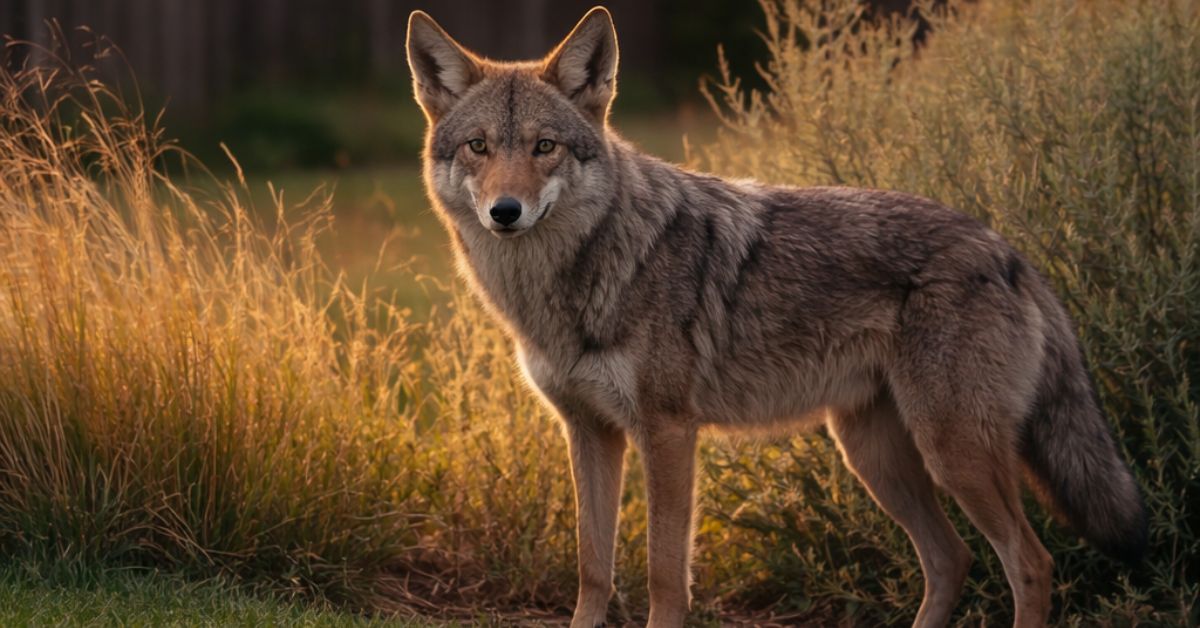
As cities and suburbs expand, the lines between human habitats and wildlife territories continue to blur. Across the United States, from the sprawling suburbs of Los Angeles to the quiet neighborhoods of the Northeast, urban coyote sightings are becoming a daily occurrence.
While coyotes are generally naturally fearful of humans, the rise in human-coyote interactions has left many homeowners wondering: Are my family and pets safe?
At Wild Conflict, we believe that understanding wildlife is the first step to peaceful coexistence. Here is everything you need to know about coyote behavior in the USA and how to protect your home, your pets, and your loved ones.
Why Are Coyotes in Our Neighborhoods?
Coyotes are incredibly adaptable creatures. Historically found in open prairies and deserts, they have successfully migrated into urban and suburban landscapes. Why? Because our neighborhoods offer a steady supply of what every wild animal is looking for: food, water, and shelter.
Our trash cans, outdoor pet food bowls, fruit trees, and the abundant populations of urban rodents (like mice and squirrels) create an all-you-can-eat buffet for a hungry coyote. As they become accustomed to human environments—a process known as habituation—they lose their natural fear, which can occasionally lead to bold behavior.
Why Are Coyotes in Our Neighborhoods?
Coyotes are incredibly adaptable creatures. Historically found in open prairies and deserts, they have successfully migrated into urban and suburban landscapes. Why? Because our neighborhoods offer a steady supply of what every wild animal is looking for: food, water, and shelter.
Our trash cans, outdoor pet food bowls, fruit trees, and the abundant populations of urban rodents (like mice and squirrels) create an all-you-can-eat buffet for a hungry coyote. As they become accustomed to human environments—a process known as habituation—they lose their natural fear, which can occasionally lead to bold behavior.
Are Coyote Attacks on Humans Common?
The short answer is no. Coyote attacks on humans are exceedingly rare. According to wildlife experts, you are statistically far more likely to be bitten by a domestic dog than a wild coyote.
However, when attacks do happen, they usually involve:
- Coyotes that have been illegally fed by humans.
- Coyotes protecting a nearby den of pups (usually in the spring).
- A coyote suffering from rabies (though this is quite rare).
The real danger lies with our pets. Small dogs and outdoor cats are viewed by coyotes as either prey or competition. Protecting them requires proactive steps.
How to Coyote-Proof Your Home and Yard
The most effective way to prevent wild conflict is to make your property unappealing to coyotes. Follow these essential safety tips:
1. Remove Outdoor Food Sources
Never intentionally feed coyotes. Keep your garbage in sturdy bins with tight-fitting or locking lids. If you feed your pets outdoors, bring their bowls inside immediately after they finish eating. Clean up fallen fruit from trees and regularly sweep up spilled birdseed, which attracts the rodents that coyotes hunt.
2. Supervise Your Pets
Never leave small dogs or cats unattended in your backyard, especially during the hours of dawn, dusk, and nighttime when coyotes are most active. Always walk your dog on a short leash (no longer than 6 feet) rather than a retractable leash, which offers little control during a wildlife encounter.
3. Secure Your Perimeter
If you live in an area with high coyote activity, consider upgrading your fencing. A coyote-proof fence should be at least 6 feet tall, extend 6 to 12 inches underground (to prevent digging), and ideally feature a “coyote roller” at the top to stop them from pulling themselves over.
4. Close Off Crawl Spaces
Coyotes look for safe, quiet places to rest or raise their pups. Block access to the areas under your porch, deck, or storage sheds using heavy-duty wire mesh.
What to Do If You Encounter a Coyote
Even with the best yard maintenance, you might cross paths with a coyote while walking your dog. If you see one, do not run. Running triggers their deep-seated predatory instinct to chase, and a coyote can run up to 40 mph—you will not outrun it.
Instead, practice a technique called Hazing. Hazing is a method of safely asserting dominance to re-instill the coyote’s natural fear of humans.
- Stand Your Ground: Face the coyote, stand tall, and make direct eye contact. Do not turn your back.
- Get Big and Loud: Raise your arms above your head or open your jacket wide to appear larger. Yell firmly and aggressively (e.g., “HEY! GO AWAY COYOTE!”). Do not scream in a high-pitched voice, as this sounds like injured prey.
- Make Piercing Noise: Use whatever you have on hand. Blow a safety whistle, use an air horn, clap your hands loudly, or shake a “hazing can” (an empty soda can filled with pennies and taped shut).
- Throw Projectiles: Toss sticks, small rocks, or tennis balls toward the coyote’s feet (not directly at its head) to spook it.
- Retreat Slowly: Once the coyote turns and backs away, slowly back away yourself, keeping your eyes on the animal until you are safe.
Important Note: Never haze a coyote if it appears sick, injured, cornered, or if it is standing directly next to its pups.
Frequently Asked Questions (FAQs)
Q: Will a coyote jump my 5-foot fence?
A: Yes, easily. Coyotes are incredibly agile and can scale fences up to 6 feet tall by hooking their front paws over the top and pulling themselves up. Coyote rollers are the best deterrent.
Q: Does coyote urine or wolf urine work as a repellent?
A: Predator urines sold in hardware stores have mixed results. While they may temporarily deter a coyote, heavy rain washes them away, and urban coyotes often quickly realize there is no actual wolf in the area. Hazing and removing food sources are much more reliable methods.
Q: Should I carry pepper spray or bear spray?
A: Yes. Carrying a canister of EPA-approved bear spray or pepper gel while walking your dog is an excellent, non-lethal way to protect yourself if a coyote aggressively approaches and ignores your hazing attempts.
Coexisting with the Wild
Eradication programs have proven ineffective against coyotes; when their numbers drop, they simply reproduce at faster rates to fill the void. The key to staying safe in the USA is adaptation. By removing attractants and knowing how to assert our dominance when we cross paths, we can safely share our environment with these resilient predators.