By the early months of 2026, the phenology of the Indian summer had shifted so dramatically that severe heat conditions, normally reserved for the peak months of May and June, firmly established themselves as early as February and March. By late April 2026, the crisis reached a startling statistical milestone: 95 of the 100 hottest cities on the planet were located within India’s borders. This rapid escalation is not an isolated meteorological anomaly but the continuation of a long-term warming trajectory exacerbated by global greenhouse gas emissions, rapid urbanization, the urban heat island effect, and shifting regional atmospheric patterns.
This comprehensive report synthesizes current meteorological data, public health statistics, socio-economic analyses, and ecological observations to provide an exhaustive examination of India’s heatwave crisis. It explores the physiological limits of human and animal endurance, the devastating surge in climate-induced wildfires, and the critical policy frameworks required to mitigate an emergency that now threatens the carrying capacity of the subcontinent.
The Meteorological Anatomy of India’s Heat Crisis
Understanding the scale and severity of the current crisis requires a meticulous examination of the precise meteorological parameters that define a heatwave, alongside the macro-climatic and localized drivers forcing these extremes into new territories.
Official Definitions, Thresholds, and Alert Systems
The India Meteorological Department (IMD) utilizes a highly specific, temperature-based matrix to classify thermal extremes, moving beyond subjective discomfort to quantify localized physiological and environmental risk. An official heatwave is declared based on either the absolute maximum temperature recorded or the departure from historical climatological normals. Crucially, for an official declaration, these threshold conditions must persist across at least two observation stations within a meteorological sub-division for two consecutive days.
| Classification | Topographical Region | Absolute Temperature Criteria | Departure from Normal Criteria |
| Normal Base Limit | Plains | ≥ 40.0°C | N/A |
| Normal Base Limit | Coastal Areas | ≥ 37.0°C | N/A |
| Normal Base Limit | Hilly Regions | ≥ 30.0°C | N/A |
| Heatwave | All Regions | – | +4.5°C to +6.4°C |
| Heatwave | Plains | ≥ 45.0°C | – |
| Severe Heatwave | All Regions | – | > +6.4°C |
| Severe Heatwave | Plains | ≥ 47.0°C | – |
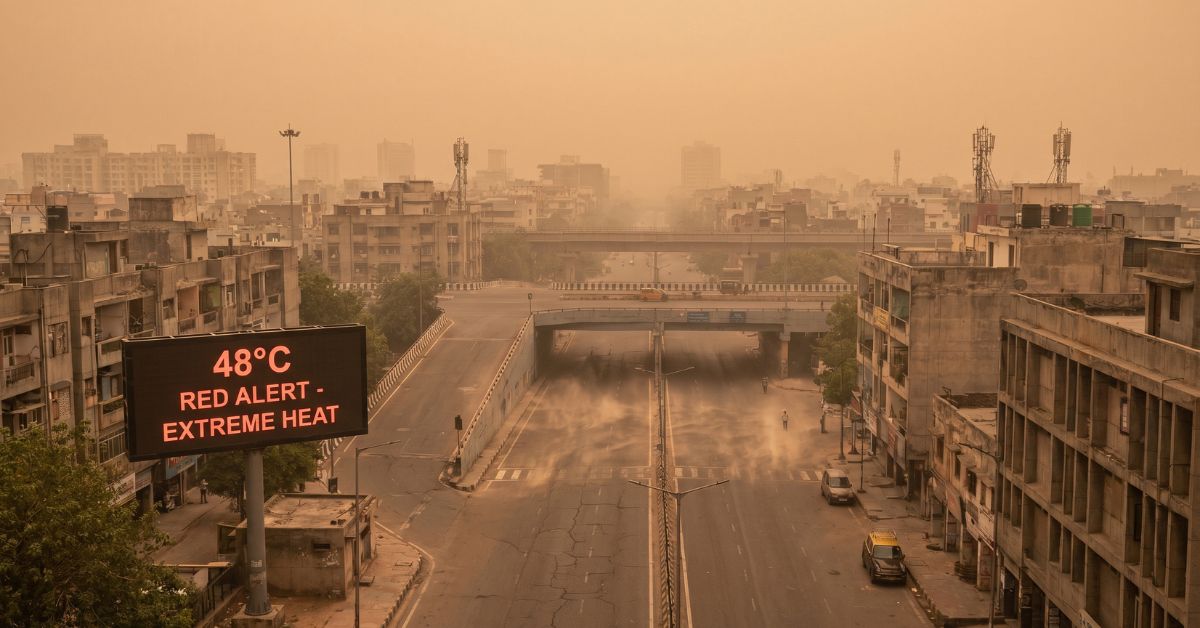
To operationalize these definitions and coordinate disaster response, the IMD employs a color-coded early warning system designed to trigger escalating municipal and state-level interventions. A “Green” alert indicates no immediate action is required; a “Yellow” alert advises the public and local agencies to stay updated on deteriorating conditions; an “Orange” alert mandates high-level preparedness, particularly for vulnerable demographics; and a “Red” alert necessitates immediate, aggressive action by local governments to prevent widespread mortality and infrastructural failure.
The Phenological Shift and Atmospheric Drivers
The fundamental nature of India’s heat crisis is evolving at a pace that severely challenges biological and infrastructural adaptation. The traditional transition period between the mild spring and the brutal peak summer has virtually vanished, leaving communities, agricultural systems, and ecological reserves with insufficient time to acclimate.
Furthermore, localized structural changes have amplified these atmospheric anomalies. Rapid, unplanned urbanization, heavy concretization, and the systematic destruction of urban wetlands and vegetation have drastically increased the Urban Heat Island (UHI) effect. The UHI effect traps long-wave solar radiation within city limits, creating artificial micro-climates where ambient temperatures remain drastically elevated well after sunset. This has given rise to the phenomenon of “warm nights,” officially defined by the IMD as instances where minimum nighttime temperatures remain markedly above normal (greater than a +5.1°C departure). Warm nights are emerging as a critical, silent killer, as they prevent the human body and local wildlife from physiologically recovering from the intense thermal stress of the day.
The 2024–2026 Thermal Trajectory: A Chronicle of Extremes
The progressive intensification of heatwaves over the last three years provides a stark empirical record of a destabilizing climate system, illustrating how quickly exceptional anomalies are becoming the new baseline.
The 2024 Baseline of Extremes
The year 2024 served as a grim precursor to the current crisis. It was recorded as the hottest year globally and nationally, with India experiencing an average temperature increase of roughly 0.65°C above the long-term historical average (dating back to 1901). The summer of 2024 generated the longest contiguous heatwave since 2010, with several states enduring oppressive daytime temperatures exceeding 40°C for an entire month.
The geographic distribution of extreme heat in 2024 demonstrated that traditional climatic safe zones were no longer immune. While historically arid regions like Rajasthan saw temperatures peak at an astonishing 50.5°C in Churu, areas previously characterized by moderate climates also succumbed. High-density urban centers were pushed to the absolute brink; areas in Delhi such as Narela and Najafgarh neared the 50°C mark, and the capital recorded its warmest night ever at a stifling 35.2°C minimum temperature.
The Unprecedented Escalation of April 2026
If 2024 established a new, elevated baseline, the events of April 2026 shattered the timeline of expectations. By the final week of April, the heatwave had achieved an unprecedented spatial scale and intensity. Real-time global meteorological tracking by air quality and weather monitoring platforms on April 24 and 25, 2026, revealed an astonishing reality: 95 of the 100 hottest cities in the entire world were situated within India’s borders.
This distinction was not limited to the traditional northern and central heat belts. The thermal dome expanded to encompass states stretching from central India (Madhya Pradesh, Chhattisgarh) down to the peninsular south (Telangana, Karnataka, Kerala) and across the eastern coast (Odisha, West Bengal, Bihar).
| Global Rank (April 2026) | City | State | Recorded Peak Temperature |
| 1 | Auraiya | Uttar Pradesh | 41.0°C |
| 2 | Budaun | Uttar Pradesh | 41.0°C |
| 3 | Etawah | Uttar Pradesh | 41.0°C |
| Top 20 | Bhagalpur | Bihar | 44.0°C |
| Top 20 | Talcher | Odisha | 44.0°C |
| Top 20 | Asansol | West Bengal | 44.0°C |
| Top 20 | Barmer | Rajasthan | 46.4°C |
(Data aggregated from )
The pervasive nature of the heat was evident even in cities traditionally lauded for their temperate, altitude-moderated climates. Bengaluru, historically known for its pleasant weather, faced severe thermal stress as the mercury repeatedly crossed 36°C to 37°C in April 2026. This anomaly, driven heavily by rapid urbanization and the loss of green cover, was viscerally demonstrated when residents documented household items, such as wax crayons, melting spontaneously indoors.
Projections, Wet-Bulb Temperatures, and the Limits of Survivability
While current temperature spikes are devastating, climate projections suggest that the subcontinent is rapidly approaching hard physiological limits. The primary metric of concern is no longer just the absolute air temperature, but the wet-bulb temperature.
The Physics of Wet-Bulb Temperature
Wet-bulb temperature is a combined meteorological measure of ambient heat and relative humidity. It represents the lowest temperature to which an object can cool down by the evaporation of moisture. This metric is critical because human thermoregulation relies almost entirely on the evaporation of sweat to dissipate internal metabolic heat.
Recent epidemiological and climatological studies have highlighted that the threat of “moist heat” is emerging as India’s most dangerous, yet least understood, climate threat. This threat is heavily governed by the moisture brought in by the southwest monsoon and coastal winds. In highly humid regions like Kerala and the coastal plains of Odisha and West Bengal, absolute temperatures of 34°C combined with high humidity can yield a physiological Heat Index that feels like 49°C to the human body.
Future Projections and Public Perception
Projections generated by the Intergovernmental Panel on Climate Change (IPCC) and other global climate models indicate that by 2050, vast portions of northern and eastern India will begin to experience heat waves that cross the 35°C wet-bulb survivability limit with an 80% probability of occurrence per decade. Even in the near term, by 2030, escalating heat stress is projected to reduce working hours in India by 5.8%, which is equivalent to the sudden loss of 34 million full-time jobs, stripping nearly 4.5% from the national Gross Domestic Product (GDP).
The public is increasingly aware of this impending cliff. A massive survey conducted by the Yale Program on Climate Change Communication (YPCCC) and CVoter between December 2024 and February 2025, which polled 10,751 individuals across India, revealed a population highly cognizant of their vulnerability. The survey found that 71% of Indians had personally experienced severe heat waves in the past 12 months. Furthermore, a striking 61% of respondents reported being “very worried” about the extinction of plant and animal species due to changing weather, demonstrating a deep public understanding that the climate crisis extends far beyond human discomfort into the realm of total ecological collapse.
The Human Toll: Mortality, Morbidity, and Socio-Economic Disruption
The translation of extreme meteorological data into human suffering is occurring at a staggering scale. Heat is a compounding, systemic hazard; it attacks human physiology directly while simultaneously eroding the economic, agricultural, and civic pillars required for societal functioning.
Mortality, Morbidity, and the Data Disparity
Heatwaves are widely classified by health professionals and disaster managers as a “silent disaster” or “invisible hazard”. Unlike acute natural disasters such as cyclones or earthquakes, heatwaves do not leave behind dramatic visual evidence of infrastructural rubble. Instead, they inflict mass, silent casualties through physiological failure. Prolonged exposure to high temperatures induces a predictable spectrum of illnesses, beginning with heat stress (thirst, dizziness), escalating to heat exhaustion (heavy sweating, severe dehydration, weakness, nausea), and culminating in heatstroke. Heatstroke is a critical medical emergency where the body’s core temperature exceeds 40°C, leading to a cessation of sweating, neurological confusion, multi-organ failure, seizures, and rapid death.
Assessing the true mortality burden of these events remains a persistent epidemiological challenge due to systemic underreporting and the difficulty of attributing cardiovascular or renal failure directly to ambient heat. Official government figures for 2024 cited 459 to 48,156 suspected heatstroke cases and roughly 161 to 269 confirmed direct deaths. However, independent public health analyses, such as the comprehensive reports published by Heat Watch, recorded over 733 heat-related deaths across 17 states during the same period. Broader epidemiological modeling suggests the true toll is vastly higher, estimating that up to 1,116 excess deaths annually are directly attributable to heatwaves in India, with some extreme estimates positing that a single widespread heatwave day across the subcontinent could result in over 3,400 excess deaths.
In early 2026, healthcare systems began buckling under the strain months ahead of schedule. By mid-April, the state of Maharashtra alone reported numerous hospitalizations and early fatalities. These included a 60-year-old farmer in Latur who collapsed and died from suspected dehydration-induced cardiac failure after working in his fields, and a woman who succumbed in Ahilyanagar. In Pune, civic health officials reported treating over 654 patients for heat-related ailments in March alone, including 202 cases of heat exhaustion, 280 cases of severe dehydration, and numerous instances of heat syncope and heat edema.
Economic Attrition and Agricultural Failure
India’s economy is highly reliant on sectors exposed directly to the elements. Approximately 75% of the Indian workforce—translating to roughly 380 million people—is engaged in heat-exposed labor, primarily in agriculture, construction, and informal outdoor retail.
The economic fallout from thermal stress is staggering. In 2024, India lost an estimated 247 billion work hours due to extreme heat. The associated potential income loss from labor capacity reduction reached an astronomical $194 billion.
The agricultural sector faces a dual threat: the inability of human laborers to safely work the fields, and the direct physiological impact of heat on the crops themselves. The IMD’s April 2026 advisories warned that extreme heat was causing significant stress during the crucial reproductive stages of Boro rice, maize, green gram, and various vegetables across eastern, northeastern, and southern peninsular India. Furthermore, the heat triggered accelerated, premature maturity in late-sown wheat, chickpeas, and lentils, drastically reducing grain filling duration and ultimately diminishing crop yields. This combination of reduced yields and heat-stressed labor forces threatens to undermine national food security and trigger severe inflationary pressures.
Democratic and Civic Disruption
The pervasive nature of the heat crisis is also threatening the foundational civic processes of the nation. The timing of the 2024 and 2026 heatwaves frequently coincided with national and state elections, demonstrating that climate extremes pose a direct, physical threat to democratic participation.
During the April 2026 elections in Tamil Nadu, Kerala, and West Bengal, severe heat severely disrupted campaigning, polling, and the safety of political workers. In a tragic incident in Salem, Tamil Nadu, a 37-year-old political worker collapsed and died of a heart attack after standing in open ground for four hours during a campaign rally where the Universal Thermal Climate Index (UTCI) exceeded 38°C. Candidates across the political spectrum reported suffering from severe sunburns, fainting spells, and dehydration, forcing political parties to fundamentally alter their strategies—shifting rallies to the late evening, distributing umbrellas and coconut water, and relying on dedicated cadres rather than the general public, who increasingly refused to endure the heat. The extreme temperatures suppressed voter turnout and forced the Election Commission to officially recognize the electoral process as “critical infrastructure” highly vulnerable to climate disruption.
Avian and Mammalian Heat Stress: The Physiological Breaking Point
While the human and economic tolls dominate public discourse, the Indian subcontinent’s rich and fragile biodiversity is undergoing a silent, catastrophic attrition. Wildlife, completely lacking the artificial cooling mechanisms, structural shading, and piped hydration available to humans, is entirely dependent on natural micro-climates, deep forest canopy cover, and perennial water sources. As extreme heat obliterates these natural refuges, both avian and mammalian species are being pushed past their biological limits.
Mammalian Heat Stress and Ecosystem Collapse
Mammals across India’s protected forests, national parks, and urban fringes are similarly being pushed beyond their physiological endurance. Severe heatwaves cause rapid dehydration, a dangerous reduction of vital body salts, profound lethargy, decreased appetite, and a complete cessation of natural breeding and migratory behaviors. A poignant and disturbing example of this distress was documented in the arid forests of the Kanha Tiger Reserve in Madhya Pradesh, where observers witnessed a sub-adult tiger desperately attempting to hydrate and cool itself in a shallow, rapidly evaporating mud puddle at the peak of the summer heat.
The broader ecological projections underscore the severity of this trend. Research indicates that extreme climate events will severely impact over 36% of terrestrial animal habitats globally by 2085. Extreme heat alters the very composition of these habitats. Forests that typically retain a baseline level of moisture through the pre-monsoon season are drying out entirely, altering the flora that megaherbivores rely upon for sustenance. For endangered species with highly restricted geographic ranges, this localized desiccation represents a direct, unavoidable path to localized extinction.
The Water Scarcity Nexus and Escalating Human-Wildlife Conflict
Perhaps the most visceral, immediate, and violent consequence of ecological desiccation is the explosive rise in human-wildlife conflict (HWC). As natural water bodies, streams, and ponds within protected forests and wildlife reserves evaporate due to unprecedented heat and prolonged dry spells, wild animals are forced by biological imperative to breach their territorial boundaries. They enter human-dominated landscapes—villages, agricultural fields, and even urban fringes—in a desperate search for hydration and sustenance.
The Driven Thirst: Megaherbivores and Apex Predators
Elephants, due to their massive size, require enormous quantities of fresh water daily merely to survive and thermoregulate. The sudden lack of water fundamentally alters their historical migration routes and behavioral patterns. In April 2026, a herd of wild elephants, suffering from intense heat in Tamil Nadu, was forced to venture out of the protective forest canopy and into a highly populated human-dominated area near the Varattupallam Dam in Gobichettipalayam, simply to drink and cool themselves in the remaining reservoir water.
When massive herbivores are forced into agricultural zones, the results are often devastating for both the species and the local communities. In Maharashtra, wildlife such as wild bulls, nilgai, wild boars, and monkeys—driven by hunger and thirst—destroy an estimated ₹10,000 crore worth of agricultural produce annually. Nighttime crop raids by desperate elephants create highly volatile, dangerous situations. Panicked villagers attempt to drive the animals away using fire, loud noises, and occasionally firearms, frequently resulting in fatal stampedes and tragic human casualties.
Forest Fires: The Inflammatory Consequence of Extreme Heat
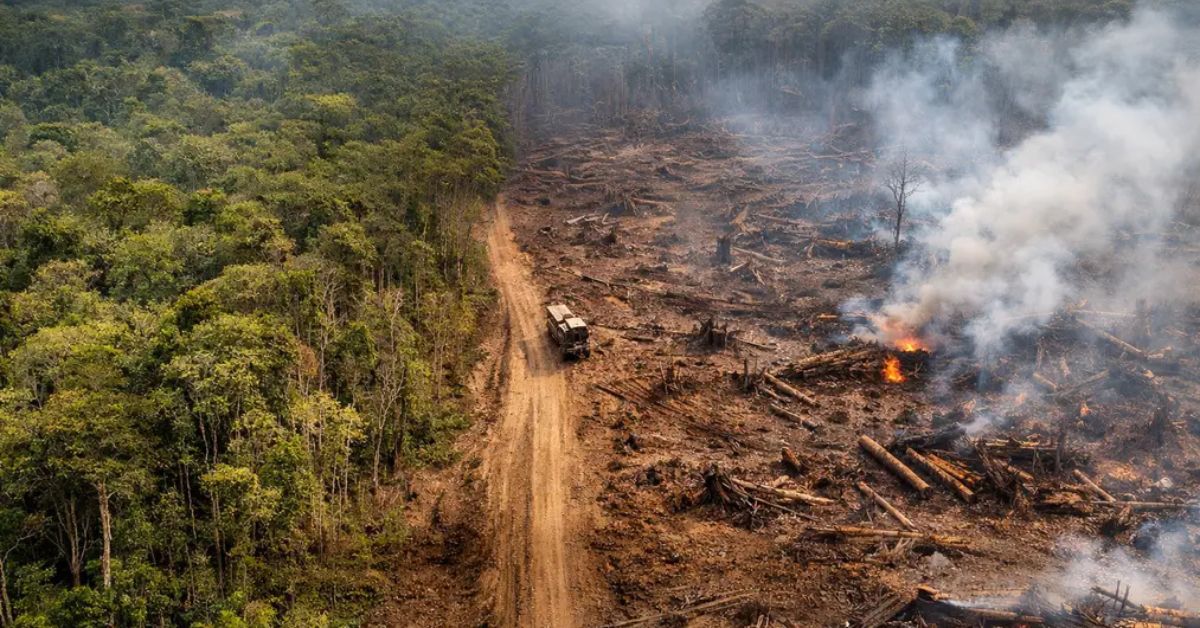
The extreme heatwaves of 2024 through 2026 have turned India’s vast forested regions into massive reservoirs of highly combustible fuel. High ambient temperatures, combined with prolonged dry spells, low humidity, and the rapid accumulation of desiccated leaf litter, have catalyzed an unprecedented surge in forest fires, creating a devastating feedback loop of ecological destruction.
The Unprecedented 2026 Wildfire Surge
An analysis of early 2026 data provided by the Forest Survey of India (FSI) and independent ecological monitors revealed a frightening escalation. In the first two months of 2026, forest fire incidents in India surged by over 80% compared to the decadal average, and were more than 50% higher than the already record-breaking year of 2024. Between January and April 2026, the FSI recorded a staggering 11,908 large forest fires across the country. Central India bore the brunt of this combustion; Madhya Pradesh topped the list with 1,743 large fires, closely followed by Maharashtra (1,245), Odisha (1,178), and Chhattisgarh (1,045).
The scale of individual events is equally alarming. The Global Disaster Alert and Coordination System (GDACS) tracked a massive wildfire event (designated WF 1028435) in India between April 10 and April 22, 2026. This single, contiguous 12-day event burned through 32,885 hectares of land and directly affected the lives, health, and properties of over 205,626 people living within or adjacent to the burned zones.
Carbon Feedback Loops and Ecological Devastation
The relationship between extreme heatwaves and forest fires forms a vicious, self-perpetuating global feedback loop. Heatwaves create the dry fuel loads necessary for rapid ignition. Once ignited, the fires release massive quantities of sequestered carbon dioxide and toxic particulate matter into the atmosphere, further accelerating global warming. Globally, the State of Wildfires project estimated that extreme wildfires emitted over 2.2 Petagrams of carbon during the 2024-2025 fire season.
Locally, the ecological damage is practically irreversible in the short term. In India, these fires destroy the deep forest canopy, removing the natural shade that cools the forest floor. Without this canopy, the underlying soil loses its ability to retain moisture, ensuring that it dries out even faster during the next heatwave. Furthermore, the intense smoke and advancing flames force wildlife to flee their core habitats in sheer panic. This mass exodus frequently drives animals directly onto highways and into human settlements, supercharging the human-wildlife conflict crisis and leading to immense suffering and loss of biodiversity.
Policy Frameworks, Mitigation, and Heat Action Plans (HAPs)
The escalating, multi-faceted threat to human survival, economic output, and ecological stability has forced the Indian government, alongside state and local municipalities, to design and deploy specialized Heat Action Plans (HAPs). However, the efficacy, scale, funding, and philosophical focus of these plans remain subjects of intense scrutiny and debate among climate scientists and policymakers.
The National and State Response Mechanisms
The National Disaster Management Authority (NDMA) provides the foundational, overarching framework for heatwave management in India. As of 2026, this framework has spurred the creation of over 300 highly localized city and district-level HAPs, with the goal of providing hyper-local early warning systems, vulnerability mapping, and climate-resilient housing policies. The standard NDMA directives focus heavily on emergency public health responses: establishing dedicated heatstroke wards in public hospitals, launching mass awareness campaigns, ensuring the availability of safe drinking water in public spaces, and legally mandating the adjustment of working hours for laborers exposed to direct sunlight.
Moving beyond mere reactive health measures, Maharashtra is pioneering structural, architectural, and nature-based solutions aimed at long-term adaptation. These innovative interventions include:
- Architectural Biomimicry and Vernacular Design: Exploring the integration of traditional, naturally cooling Wada architecture alongside modern biomimicry. These designs aim to naturally lower indoor ambient temperatures through improved ventilation and structural shading, drastically reducing the reliance on energy-intensive air conditioning.
- Cool Roof Initiatives: Implementing highly reflective “cool roofs” across dense urban slums, such as Dharavi in Mumbai. By utilizing specialized reflective paints and materials, these roofs deflect solar radiation and can drop indoor temperatures by 2°C to 4°C, providing vital, life-saving thermal relief to vulnerable populations living under tin or asbestos sheets.
- Agricultural Resilience and Parametric Finance: Establishing community-managed Livelihood Resilience Funds to help drought-stricken cotton farmers diversify their crops and adopt water-efficient practices. The NDMA is also exploring the rollout of parametric insurance to shield outdoor manual workers from the income losses they face when forced to suspend labor during peak heat hours.
Critiques and the Need for Integrated Structural Mitigation
Despite these commendable policy advancements, environmental analysts and public health experts argue that the vast majority of India’s HAPs remain structurally flawed and philosophically narrow.
The primary critique is that these plans are overwhelmingly reactive rather than proactive. They focus on managing the acute emergency once the heatwave has already hit—such as advising the public to stay indoors or stocking hospitals with intravenous fluids—rather than investing in the structural, long-term interventions necessary to cool the environment. Experts are calling for massive investments in urban regreening, the restoration of degraded wetlands, and the enactment of strict, enforceable heat-safety labor legislation.
Finally, and perhaps most critically for the holistic health of the subcontinent, current heat action paradigms are almost entirely anthropocentric. They focus exclusively on human populations and urban centers, rarely incorporating proactive provisions for wildlife protection, forest hydration, or the mitigation of climate-induced human-wildlife conflict. By ignoring the reality that ecological collapse, water scarcity, and the deadly spillover of desperate wildlife into human settlements are inextricably linked to the heat crisis, current policies address only half of the emergency.
Synthesis and Strategic Imperatives
India’s confrontation with extreme heat is no longer a localized, manageable, or strictly seasonal challenge; it is a complex, multi-dimensional crisis that fundamentally threatens the carrying capacity of the subcontinent. The climatological trajectory mapped from the record-breaking year of 2024 to the unprecedented extremes of early 2026 illustrates a climate system that has moved decisively beyond historical parameters. This shift is driven inexorably by global anthropogenic warming and is severely compounded by local environmental degradation, deforestation, and rapid, unsustainable urbanization.
The implications of this shift are profoundly interconnected. The exact same rising wet-bulb temperatures that push human outdoor labor past the limits of physiological survivability are simultaneously desiccating ancient forest reserves and igniting unprecedented winter and pre-monsoon wildfires. As these deep-forest habitats degrade into dry tinder, and artificial waterholes run completely dry due to municipal funding shortfalls, the invisible boundary between human and wildlife spaces disintegrates. The resulting, violent surge in human-wildlife conflict—from thirsty elephants raiding agricultural water sources and disrupting elections, to leopards hunting livestock in suburban fringes—must be recognized not merely as isolated conservation or nuisance issues, but as direct, second-order symptoms of the broader climate emergency.