When we think of war, we visualize human tragedy, destroyed cities, and economic collapse. However, beneath the smoke of battle lies a silent, forgotten victim: the natural world. War Ecology—the study of how armed conflict affects ecosystems—reveals that the scars of battle last far longer in the wild than they do in human society.
From the chemical defoliation of forests to the systemic poaching of endangered species, war acts as a catastrophic “biological disruptor” that can reset an ecosystem’s clock by centuries.
Habitat Destruction: The “Scorched Earth” Reality
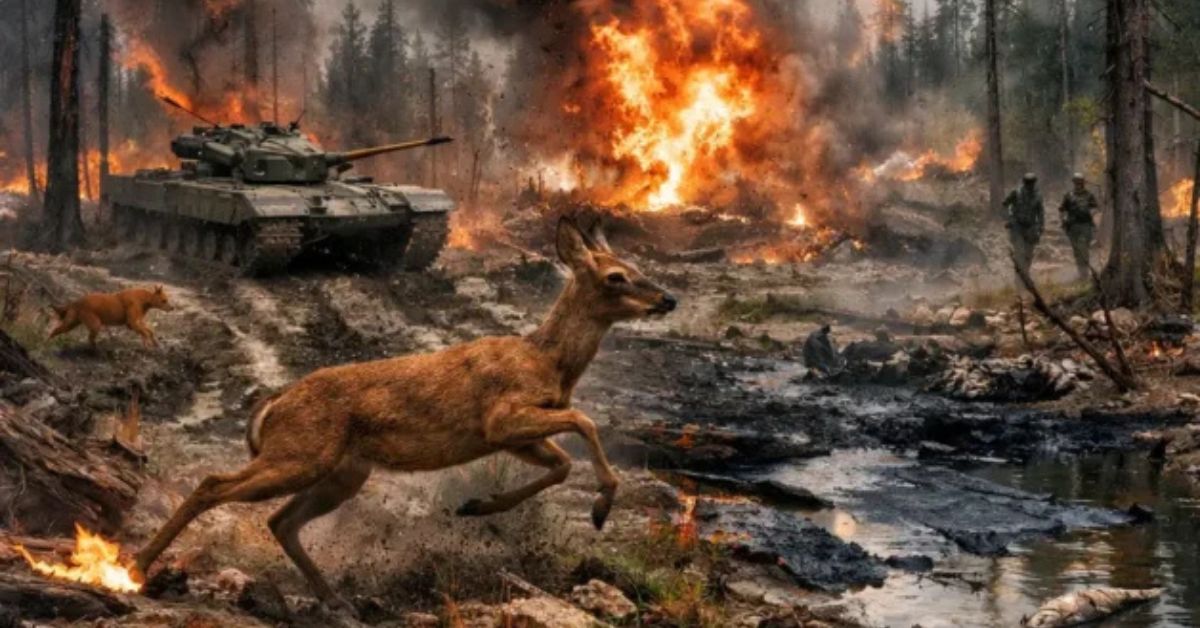
The most immediate impact of war is the physical destruction of the environment. In modern warfare, nature is often used as a tactical obstacle or a shield, leading to its intentional destruction.
- Deforestation: To deny cover to enemy forces, vast tracts of forests are often cleared using heavy machinery or chemical agents (like Agent Orange). This leads to an instant loss of nesting sites and food sources for thousands of species.
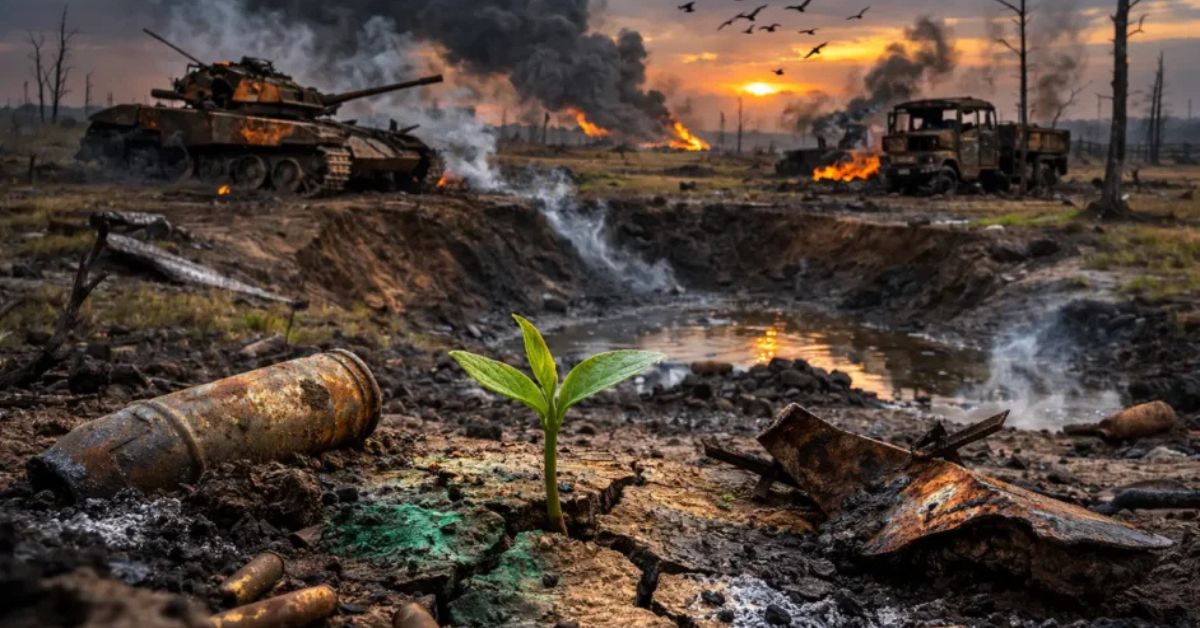
- Cauterization: Heavy artillery and carpet bombing create massive craters that disrupt soil structure and natural drainage patterns. This can turn fertile grasslands into stagnant, mosquito-breeding pools, altering the local insect and bird populations.
- Infrastructure Collapse: The destruction of dams or industrial plants can lead to catastrophic flooding or toxic chemical leaks into nearby river systems, killing aquatic life instantly.
The Rise of “Crisis Poaching”
Conflict often destroys the local economy, leaving civilian populations and armed groups desperate for resources. This leads to what researchers call Crisis Poaching.
- Bushmeat Trade: As food supply chains break down, people turn to local wildlife for protein. In conflict zones, even protected species like gorillas or elephants are hunted for food.
- Financing the Fight: Endangered species are often used to fund insurgencies. The illegal trade of ivory, rhino horns, and exotic timber becomes a “conflict currency,” fueling further violence while pushing species to the brink of extinction.
- The Loss of Guardians: War forces park rangers and conservationists to flee. Without these “boots on the ground,” protected areas become open-access zones for international smuggling syndicates.
Pollution: The Toxic Legacy of Remnants of War (ERW)
War leaves behind a chemical cocktail that poisons the earth for generations. This is known as the Toxic Remnants of War.
- Heavy Metal Contamination: Shells, bullets, and landmines contain lead, antimony, and depleted uranium. Over time, these metals leach into the soil and groundwater, entering the food chain through plants and affecting the health of herbivores and predators alike.
- Unexploded Ordnance (UXO): Landmines don’t just kill humans; they are a constant threat to large mammals. An elephant or a tiger stepping on a mine in a conflict zone is a common, though rarely reported, tragedy.
- Fuel and Oil Spills: Bombing of oil refineries or naval battles leads to massive spills that suffocate marine life and coat coastal birds in toxic sludge, making flight and thermoregulation impossible.
Environmental Impact of Conflict
| Impact Factor | Short-term Effect | Long-term (Post-War) Effect | Ecosystem Status |
| Vegetation | Fire and Defoliation | Soil Toxicity & Invasive Species | Degraded |
| Mega-Fauna | Direct Mortality (Poaching) | Genetic Bottlenecks | Endangered |
| Water Quality | Chemical Pollution | Groundwater Contamination | Toxic |
| Soil Structure | Compaction/Craters | Loss of Microbiome | Sterile |
| Conservation | Ranger Displacement | Institutional Collapse | Vulnerable |
Disruption of Migration and Behavior
Wildlife follows ancient rhythms—migration paths that have existed for millennia. War acts as a massive physical and acoustic barrier to these movements.
- Acoustic Trauma: The sound of explosions and low-flying jets can cause severe stress in animals, leading to reproductive failure or abandonment of habitats. Marine mammals like whales and dolphins are particularly sensitive to underwater explosions and sonar, which can lead to mass strandings.
- Barrier Effects: Trenches, fences, and military movements prevent animals from accessing vital water sources or breeding grounds, leading to high mortality rates among juvenile populations.
The “Dark Side” of Resilience: Invasive Species
War often introduces new species to an area, either through military cargo or the abandonment of pets and livestock.
- Ecological Takeover: In a stressed ecosystem, hardy invasive species can quickly outcompete weakened native species.
- Pathogen Spread: Movement of troops across borders can introduce new diseases into wildlife populations that have no natural immunity, leading to localized “wildlife pandemics.“
The Paradox: Can War Ever Help Nature?
In very rare cases, conflict creates “No-Go Zones” (like the DMZ between North and South Korea) where human activity stops entirely.
- Accidental Sanctuaries: Because humans are too afraid to enter these mined or militarized areas, wildlife can sometimes flourish in the absence of farming and urban development. However, this “benefit” is usually outweighed by the toxic legacy and the risk of unexploded mines.
Solutions: Post-War Ecological Restoration
Healing the earth after war requires a dedicated scientific approach:
- Green De-mining: Using biological sensors (like trained rats or bees) to locate mines without destroying the soil.
- Environmental Peacebuilding: Using shared natural resources (like a trans-boundary river) to bring former enemies together for conservation.
- Legal Frameworks: Strengthening international laws (like the Geneva Conventions) to explicitly classify “Ecocide” (mass environmental destruction) as a war crime.
Conclusion: Nature is the Ultimate Victim
War is often seen as a human-centric event, but its environmental footprint is massive and enduring. When a forest is burned or a species is lost during a conflict, it is a loss for all of humanity. As we move towards a future of increasing resource scarcity, the protection of biodiversity during times of conflict is not just a moral duty—it is a necessity for the survival of the planet.
Peace for humans must also mean peace for the planet. Without a healthy ecosystem, any post-war recovery will be fragile and unsustainable.