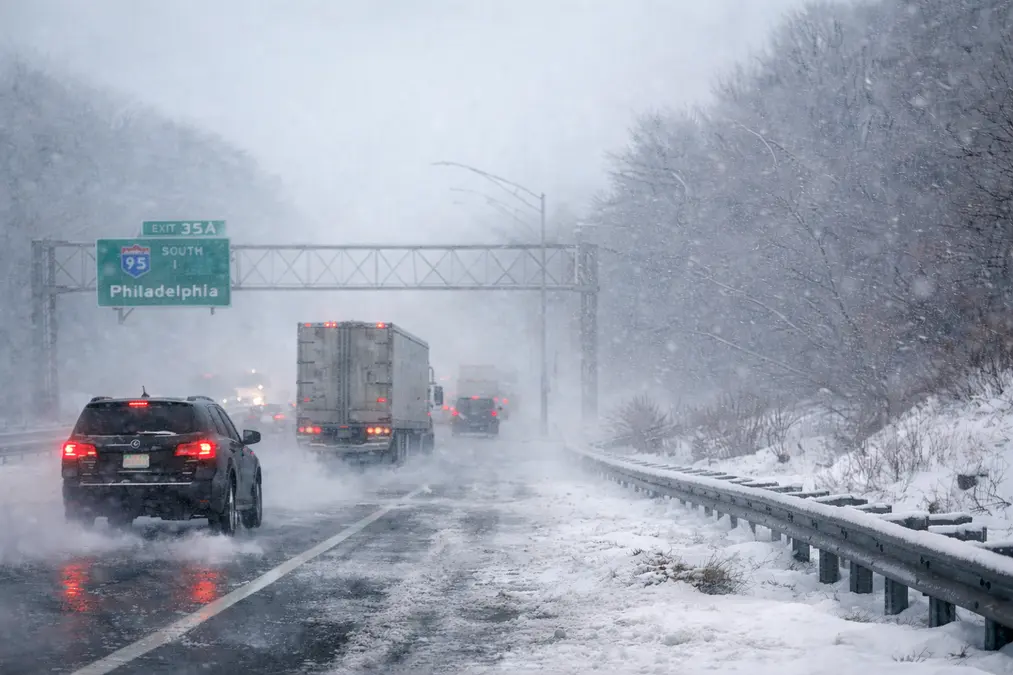
Winter weather in the United States is often associated with long snowstorms and blizzards, but some of the most dangerous winter events happen in silence and speed. One such event is a snow squall—a weather phenomenon that can turn normal winter conditions into a life-threatening situation within minutes.
What is a Snow Squall
A snow squall is a short-lived but extremely intense burst of snowfall, usually accompanied by strong winds and a sudden drop in visibility. Unlike major snowstorms that develop over hours or days, snow squalls arrive rapidly and unexpectedly, often lasting less than an hour at any given location.
What Happens During a Snow Squall
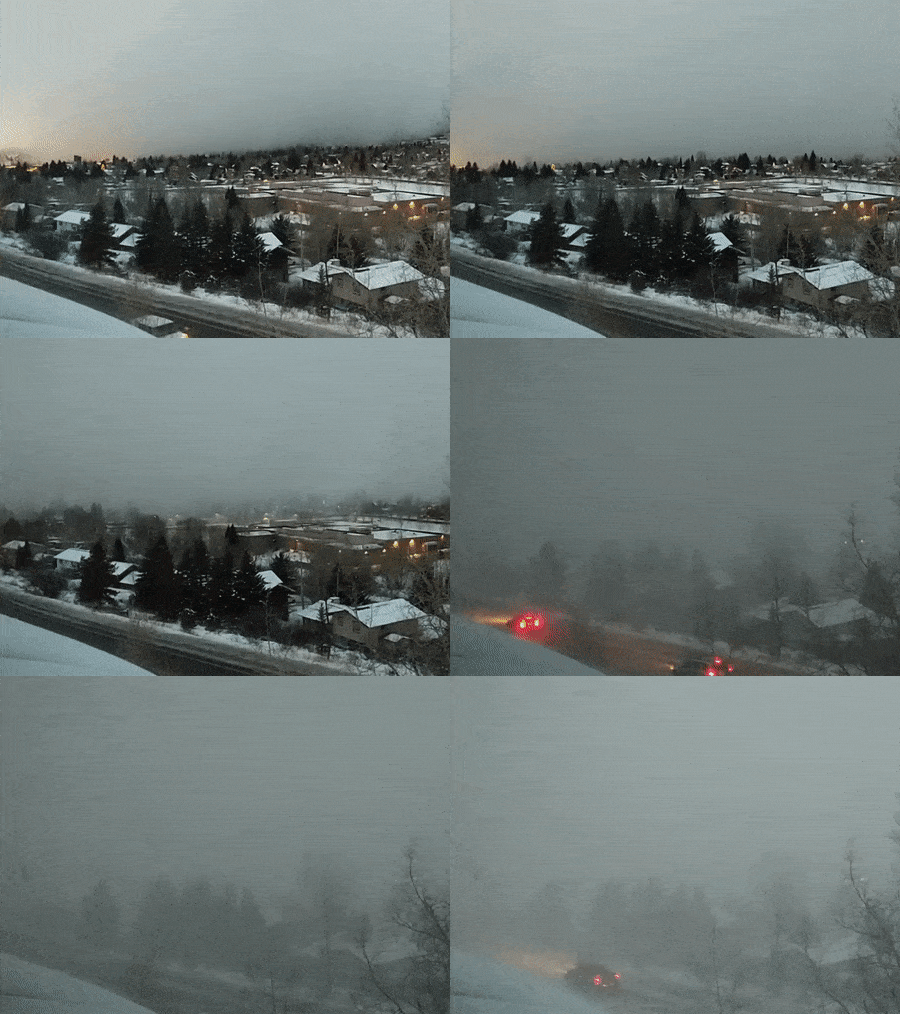
When a snow squall hits, conditions can change almost instantly. Clear or lightly cloudy skies may suddenly be replaced by heavy, fast-falling snow. Visibility can drop to near zero, creating whiteout conditions that make it nearly impossible to see vehicles, road signs, or lane markings. At the same time, cold air and blowing snow can cause roads to flash-freeze, forming a thin but extremely slippery layer of ice. Because this happens so quickly, drivers often have no time to slow down or adjust, which is why snow squalls are frequently linked to serious highway accidents.
The Science Behind Why Snow Squalls Kill
Flash Freezing: Roads Become Ice Rinks in Seconds
When a snow squall arrives, a sharp surge of arctic air follows immediately behind it. Road surfaces above freezing just moments earlier are suddenly hit with temperatures well below zero. Water freezes — instantly.
The result is black ice: a thin, nearly transparent glaze essentially invisible to drivers. At 70 mph on dry pavement, stopping safely requires approximately 300 feet. On black ice, that distance multiplies by 5 to 10 times. You need the length of nearly two football fields — on ice you cannot see, with cars ahead already sliding.
Whiteout: When Your Eyes Become Useless
The human eye depends on contrast to perceive depth and distance. Snow squalls eliminate contrast entirely. Drivers inside a full whiteout cannot distinguish the road from the sky, or see the vehicle directly ahead.
Speed perception collapses completely. A vehicle at 70 mph can feel stationary with no reference points. The instinct to brake suddenly is understandable — and almost universally wrong. Sudden braking on flash-frozen asphalt causes immediate loss of control.
The False Security Trap
Here is the most dangerous truth about snow squalls: they do not look threatening until you are already inside one.
From a distance, a driver approaching a squall sees a patch of white. It resembles the kind of light snow shower that has never caused problems before. Speed is maintained. The assumption is that it will pass in moments.
By the time they realize the severity, they are inside it — at highway speed, on frozen road, with zero visibility. Studies of major snow squall pileups consistently find the same finding: drivers did not reduce speed before entering the squall. Not from recklessness — but because nothing in their experience had prepared them for how fast conditions could become catastrophic.
Why the U.S. Issues Special Snow Squall Warnings
Because of their extreme danger and short duration, snow squalls are treated differently from normal winter weather. The National Weather Service issues Snow Squall Warnings to alert the public that dangerous conditions are imminent or already occurring.
Additionally, understanding the dynamics of a snow squall is crucial for improving forecasting methods and public awareness.
- These warnings are designed to:
- Prompt drivers to slow down immediately
- Reduce the risk of multi-vehicle pileups
- Alert emergency services and transportation departments
- Emphasize urgency rather than long-term snowfall totals
In many ways, snow squall warnings function like severe thunderstorm warnings—but for winter conditions.
Where Snow Squalls Commonly Occur in the USA
Snow squalls are most common in regions where cold air moves quickly across land or water. They frequently affect:
- The Great Lakes region, due to lake-effect snow processes
- The Midwest, where fast-moving cold fronts are common
- Parts of the Northeast and Northern Plains
In these areas, snow squalls can form even when no major winter storm is present, making them harder to anticipate.
Environmental and Public Safety Perspective
From an environmental standpoint, snow squalls highlight how small-scale atmospheric changes can create extreme impacts. As climate patterns become more variable, sudden weather events like snow squalls are drawing increased attention from scientists and safety agencies.
For public safety, the concern is clear: speed and surprise, not snow depth, are the primary risks. A brief weather event can cause long-lasting consequences through accidents, road closures, and emergency responses.
Climate Change and the Future of Snow Squalls
The relationship between climate change and snow squall frequency is actively being studied, and the answer is more complex than a simple yes or no.
Overall warming is reducing total snowfall across much of the U.S. But some research suggests that as Great Lakes water temperatures rise, the lake-effect process may actually intensify in the short term — warmer lake water provides more moisture for cold air to pick up, potentially producing more severe squalls even as the overall snow season shortens.
More broadly, climate scientists document that weather variability is increasing — meaning more sudden transitions between atmospheric states. The rapid change that produces a snow squall is exactly this kind of transition. Snow squall preparedness cannot be reduced simply because winters feel warmer overall.
Frequently Asked Questions
Q: How is a snow squall different from a regular snowstorm?
A snow squall is a brief, intense burst of snow lasting under an hour, with near-zero visibility and flash-freezing road conditions. A regular snowstorm builds over hours, provides more warning, and produces significantly more total snowfall. Snow squalls are more dangerous per minute because of their sudden onset during high-speed driving.
Q: How much warning do drivers get before a snow squall hits?
Snow Squall Warnings are typically issued 30 to 60 minutes before expected onset — far less lead time than winter storm warnings. Enabling Wireless Emergency Alerts on your phone is the single most important preparedness step you can take.
Q: Why do snow squalls specifically cause so many multi-vehicle pileups?
The relationship between climate change and snow squall frequency is actively being studied, with researchers focusing on how these events, like the snow squall, can impact public safety and infrastructure.
Pileups occur because squalls strike high-speed highway traffic with almost no warning. When the lead vehicle brakes on flash-frozen road, vehicles behind cannot stop in time. Each collision becomes an obstacle for the next. The linear structure of highway traffic turns a brief weather event into a chain reaction within seconds.
Q: Are snow squalls getting worse due to climate change?
By recognizing patterns associated with snow squall events, communities can better prepare and respond to these sudden weather changes.
Research suggests Great Lakes squalls may intensify as lake water temperatures rise, even as overall snowfall decreases. Increased weather variability from climate change also points toward more frequent rapid atmospheric transitions — the exact mechanism that creates snow squalls.
Q: Which U.S. states have the highest risk of snow squall accidents?
Michigan, Ohio, Pennsylvania, New York, Indiana, Wisconsin, Illinois, and Minnesota are most frequently affected. The Great Lakes corridor and major Pennsylvania and New York interstates have the highest documented concentration of snow squall accidents.