When we see a tumbleweed rolling across a desert road in a movie, it often feels like a symbol of the peaceful, open West. However, in the world of ecology, tumbleweed is far from peaceful. It is a biological invader—a sign of disturbed land, dying soil, and a broken ecosystem. What looks like a dry, rolling plant is actually a highly efficient seed-dispersal machine that is reshaping landscapes across the globe.
What is Tumbleweed? The Science of the “Russian Thistle”
Tumbleweed is not a single species but a name given to several plants, most notably the Salsola tragus (Russian Thistle). These plants are invasive species that were accidentally introduced to regions like North America in the late 19th century.
How it Works: The “Rolling” Strategy
Once the plant reaches maturity and produces seeds, it dries out and develops a specialized “breakaway” point at the base of its stem. A single gust of wind snaps the plant from its root, and it begins to roll.
- The Seed Bomb: As it rolls, it can scatter between 50,000 to 200,000 seeds over miles of land.
- Rapid Growth: These seeds are incredibly hardy and can germinate with minimal water, allowing them to dominate areas where native plants struggle to survive.
The Environmental Impact: Stealing Life from the Soil
Tumbleweed does not just grow; it colonizes. It thrives in “disturbed” lands—areas affected by overgrazing, construction, or poor farming.
- Water Theft in Arid Regions
In semi-arid regions where water is gold, tumbleweed is a thief. It has a massive, shallow root system that absorbs moisture immediately after a light rain, leaving nothing for native grasses or shrubs. This creates a “desertification loop” where native plants die off, leaving more space for more tumbleweed. - Soil Erosion and Degradation
Native plants have deep roots that bind the soil together. Tumbleweed, being a temporary guest that detaches itself, leaves the topsoil loose and exposed. When the wind blows, this topsoil is carried away, leading to severe land degradation and making the earth infertile for future generations of native flora.
The Fire Trap: Why Tumbleweed is a Safety Hazard
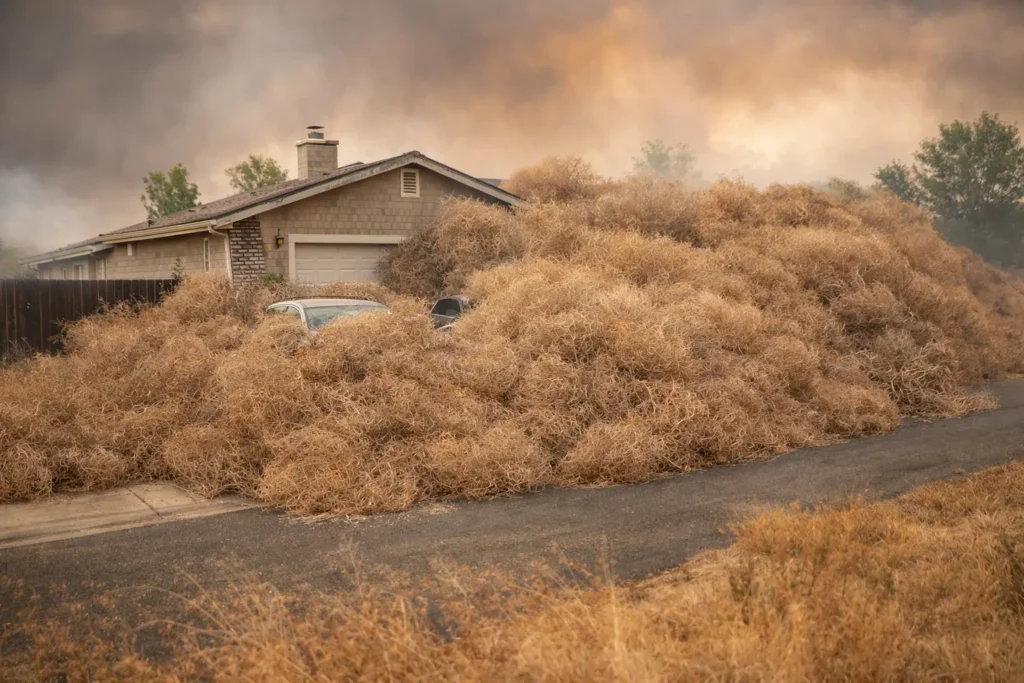
One of the most dangerous aspects of a tumbleweed invasion is its role as a “Mobile Fire Starter.”
- Fuel Piles: Large numbers of dry tumbleweeds often get trapped against fences, houses, or in dry ravines, creating massive piles of highly flammable material.
- Rolling Fireballs: During a wildfire, a rolling tumbleweed can catch fire and be carried by the wind across firebreaks, spreading the blaze to areas that were previously safe. This makes wildfires in tumbleweed-infested regions nearly impossible to contain.
Wildlife and Biodiversity: A Broken Food Chain
Wildlife suffers silently as tumbleweed takes over.
- Habitat Destruction: Dense clusters of tumbleweed block the movement of small mammals and reptiles. Ground-nesting birds find it impossible to find safe spots amidst the shifting, thorny debris.
- Loss of Nutrients: Unlike native shrubs, tumbleweed provides very little nutritional value for herbivores. As native grazing plants disappear, the entire food chain—from insects to apex predators—begins to weaken.
The Agricultural Nightmare: The Cost of Neglect
For farmers and ranchers, tumbleweed is a costly enemy.
- Contaminated Grazing Land: It reduces the quality of hay and grazing pastures, sometimes even injuring livestock with its sharp, dried thorns.
- Equipment Damage: It clogs irrigation canals and gets tangled in farm machinery, leading to expensive repairs and lost productivity.
Tumbleweed vs. Native Vegetation
| Feature | Tumbleweed (Invasive) | Native Grasses/Shrubs |
| Root System | Shallow, aggressive water absorption | Deep, soil-binding roots |
| Seed Dispersal | 50,000+ seeds per plant via rolling | Seasonal, localized dispersal |
| Fire Risk | High (Dry, mobile fuel) | Low to Moderate |
| Soil Impact | Increases Erosion | Prevents Erosion |
| Wildlife Value | Minimal (Nuisance) | High (Food & Shelter) |
Long-Term Solutions: Restoring the Balance
Simply removing tumbleweed is a temporary fix. To solve the problem, we must address the root cause: Land Health.
- Re-seeding Native Species: Planting hardy native grasses that can out-compete tumbleweed for water.
- Controlled Grazing: Preventing overgrazing so that the soil is never left completely bare.
- Soil Restoration: Using organic matter to improve soil structure, making it less hospitable to invasive weeds.
Conclusion: More Than Just a Rolling Weed
Tumbleweed is a visible indicator of an invisible crisis. It tells us that the land is stressed, the water is vanishing, and the natural balance has been lost. If we continue to ignore these “rolling warnings,” we risk turning our vibrant landscapes into barren, flammable wastelands. Protecting our soil today is the only way to stop the tumbleweed from rolling into our future.