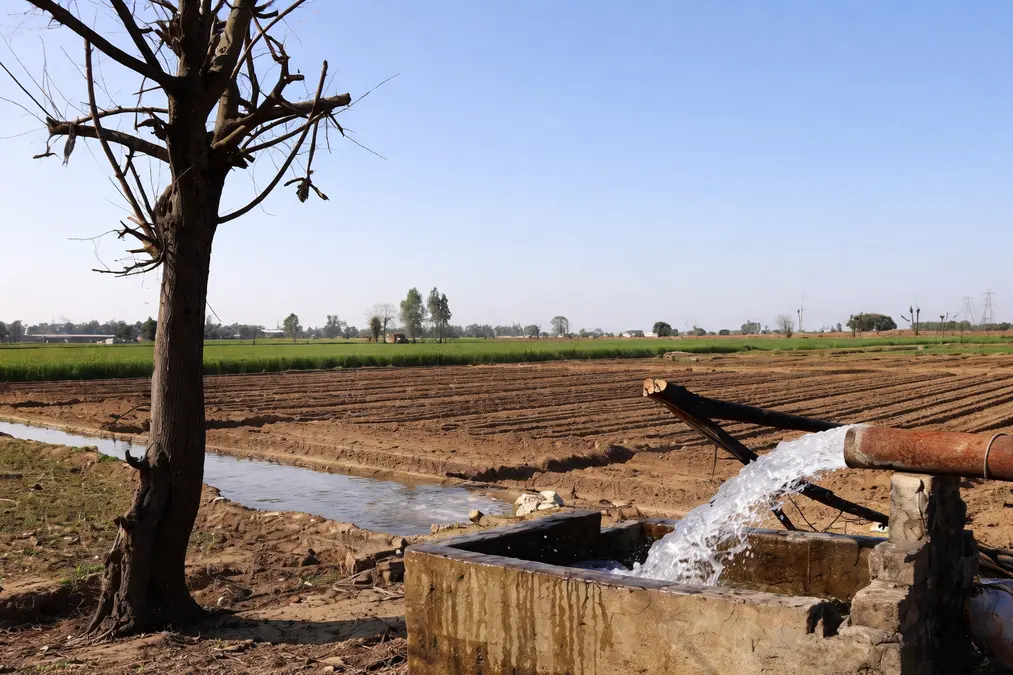
In the heart of Punjab, life has always revolved around water. However, beneath the lush green fields of the Malwa Region—specifically in districts like Bathinda, Mansa, Faridkot, and Sangrur—a dark and invisible threat is quietly spreading: Uranium in Punjab Groundwater, Uranium contamination.
Unlike traditional pollutants, Uranium is tasteless, odorless, and colorless. It slips into daily life without warning, affecting the very water used for drinking, cooking, and irrigation.
Why Uranium in Punjab groundwater an “Invisible” Environmental Crisis
For most people, Uranium is associated with nuclear power. In Punjab, however, it has become a domestic health hazard. In small villages, farmers pull water from tube wells just as their ancestors did, unaware that the clear water now carries traces of heavy metals.
Because the symptoms of exposure build up slowly over years, it does not trigger the same immediate alarm as a sudden natural disaster. It is a slow, systemic crisis that thrives on silence and routine.
Scientific Analysis: X-Ray Fluorescence (XRF) Technique
To understand the gravity of this crisis, researchers use advanced methods like the X-ray Fluorescence (XRF) technique.
- How it Works: XRF is a non-destructive analytical technique used to determine the elemental composition of materials. By exposing water and soil samples from Punjab to high-energy X-rays, scientists can identify the “fluorescent” secondary X-rays emitted from the Uranium atoms.
- Accuracy: This method allows for the detection of even minute trace amounts of Uranium, providing a precise map of hotspots across the Malwa belt.
Uranium Levels: Natural vs. Punjab Hotspots
| Category | Uranium Level (micrograms per litre – µg/L) |
| WHO Safe Limit (Natural/Safe Level) | 30 µg/L |
| Normal Groundwater (Average) | < 10 µg/L |
| Punjab Affected Villages (Hotspots) | 200 µg/L to 600+ µg/L |
How Did Uranium Enter the Water Table?
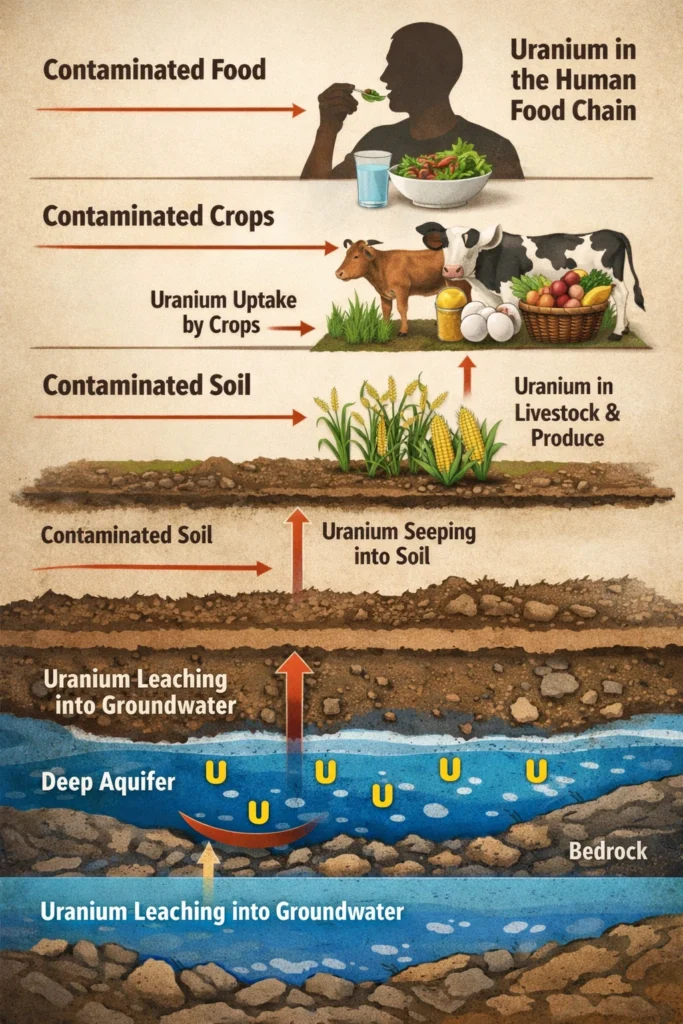
Uranium exists naturally in the earth’s crust, usually locked safely within rocks. However, human activity and intensive agricultural practices have disturbed this natural balance:
- Deep Extraction: Over-pumping of groundwater for rice and wheat cultivation has forced us to tap into deeper geological layers.
- Chemical Reactions: Changes in the water table’s chemistry, caused by excessive extraction and soil composition, cause Uranium to dissolve into the water.
- Geological Disturbance: This isn’t a result of a single industrial accident; it is a consequence of putting extreme pressure on natural resources without a sustainable plan.
The “Virus” Beneath the Soil
Groundwater flows through vast underground networks called aquifers, which do not respect village or state boundaries. When one area becomes contaminated, the movement of water ensures the threat spreads to neighboring communities.
Many experts describe this as “spreading like a virus.” While not a biological infection, its quiet and unnoticed movement from one village to another makes it just as dangerous. By the time a community realizes their water is unsafe, the environmental and health impact is often already severe.
Socio-Economic Consequences for Rural Punjab
The human cost of this contamination is a growing field of sociological study.
- Health Burden: Families in the Malwa region face immense medical costs due to chronic illnesses linked to heavy metal toxicity.
- Economic Stagnation: Land values in heavily contaminated zones can drop, and the uncertainty of water safety disrupts long-term agricultural planning.
Solutions: The Path to Safe Water
To protect the future of Punjab’s agriculture and its people, urgent action is required. We must move from denial to proactive management:
- Regular Water Testing: Implement rigorous testing at the village and block levels.
- Public Transparency: Ensure all water quality data is accessible to the public.
- Sustainable Farming: Shift toward crops and techniques that reduce the heavy burden on groundwater.
- Alternative Filtration: Provide rural households with advanced filtration systems capable of removing heavy metals.
Conclusion
Punjab’s fields still shine green under the sun, but their future depends on the water flowing beneath them. This crisis is a warning for every region that pushes nature to its limits. By acknowledging the “dragon beneath the fields” and taking immediate scientific action, we can ensure that the water of Punjab remains a source of life, not a silent threat.