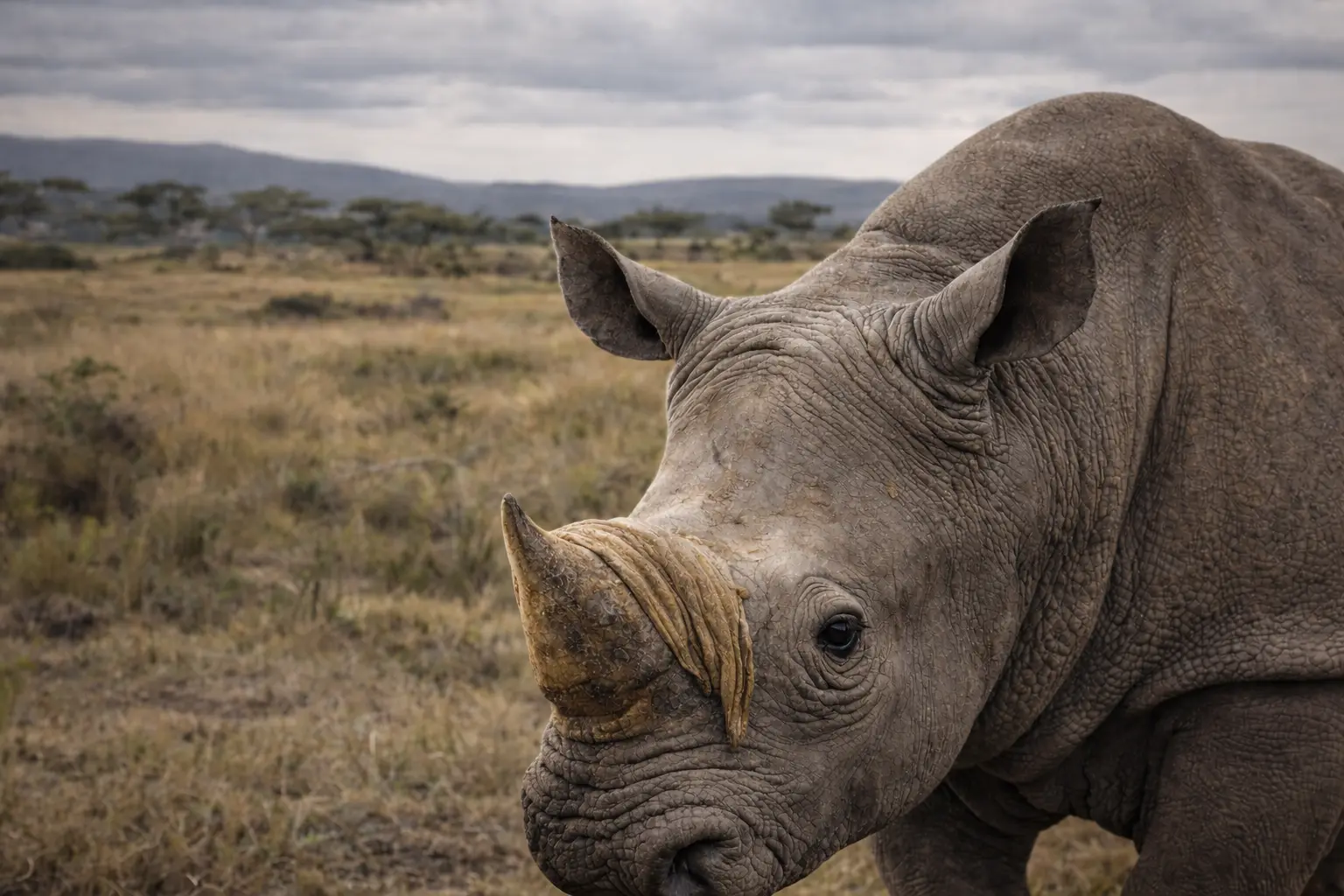
Radioactive Rhino Horns are emerging as one of the most innovative tools in the fight against illegal wildlife trade. In the wide grasslands of Africa, the rhinoceros once roamed without fear, shaping the land and maintaining balance in the ecosystem. But in the modern world, the rhino became valuable for the wrong reason—its horn.
As demand for rhino horn grew in parts of Asia, criminal networks began to stretch across continents. What started as local poaching slowly transformed into a global business involving smugglers, middlemen, and international trafficking routes. According to conservation groups such as the World wildlife Fund, the rhino horn trade became part of organized crime, not unlike drug or arms trafficking. Each horn removed from Africa gained value with every border it crossed, while the cost was paid by the animal left bleeding in the dust.
Governments and wildlife authorities fought back with everything they had. Armed patrols guarded reserves, helicopters scanned forests, and fences were built to slow down poachers. Some parks even removed rhino horns entirely, hoping that a hornless rhino would not be worth killing. But none of these solutions addressed the core problem. As long as rhino horn could be sold and transported quietly, the killing continued. Guards could not be everywhere, and fences could always be broken.
It was in this moment of frustration that scientists in South Africa began to think differently. Instead of asking how to protect the rhino, they asked how to destroy the trade itself. What if a rhino horn could no longer move across borders unnoticed? What if carrying it became a risk rather than a reward? This question led to an unlikely partnership between wildlife conservationists and nuclear scientists from the University of the Witwatersrand and the South African Nuclear Energy Corporation.
Their answer sounded shocking at first inject rhino horns with a tiny amount of radioactive material. The word “radioactive” caused instant concern, but the science told a different story. The isotopes used were extremely low-level, far below anything harmful to animals or the environment. The horn itself is not living tissue, and the radiation exposure was lower than that of a routine medical scan. Veterinarians sedated the rhino briefly, injected the material into the horn, and released the animal back into the wild, completely unharmed.
From that moment, the horn carried an invisible signature. If a poacher tried to cut it and move it through an airport, seaport, or land border, the horn would trigger radiation scanners already installed around the world for security purposes. Even powdered horn or small fragments could not escape detection. Radiation cannot be hidden, masked, or explained away.
The real power of this system was not just in catching smugglers, but in changing their behavior. Once word spread that rhino horns could set off alarms anywhere in the world, the trade began to feel dangerous. Buyers became nervous. Smugglers hesitated. The horn was no longer a silent product that could be slipped through customs. For security reasons, authorities did not publicly name specific trade routes or buyers, but conservation agencies confirmed a critical shift: demand weakened. And when demand weakens, poaching loses its incentive.
This mattered far beyond the fate of a single species. Rhinos play a crucial role in African ecosystems. By grazing and moving through landscapes, they maintain grasslands, help other species survive, and keep habitats healthy. Losing them would trigger long-term ecological damage that could not easily be reversed. By turning the horn into a liability instead of a prize, conservationists bought time—not just for rhinos, but for entire ecosystems.
The project also sent a powerful message to the world. Wildlife conservation does not have to rely only on fences and firearms. Science, when used responsibly, can protect nature in unexpected ways. The success of radioactive horn tagging opened conversations about whether similar ideas could one day be used to combat ivory trafficking, pangolin scale smuggling, and other forms of wildlife crime.
In the end, this story is not about radiation or technology alone. It is about changing the rules of a deadly game. By making illegal trade visible and risky, scientists removed the silence that once protected traffickers. For the first time in decades, rhinos were no longer just targets. They became symbols of how innovation can give endangered wildlife a second chance to survive.