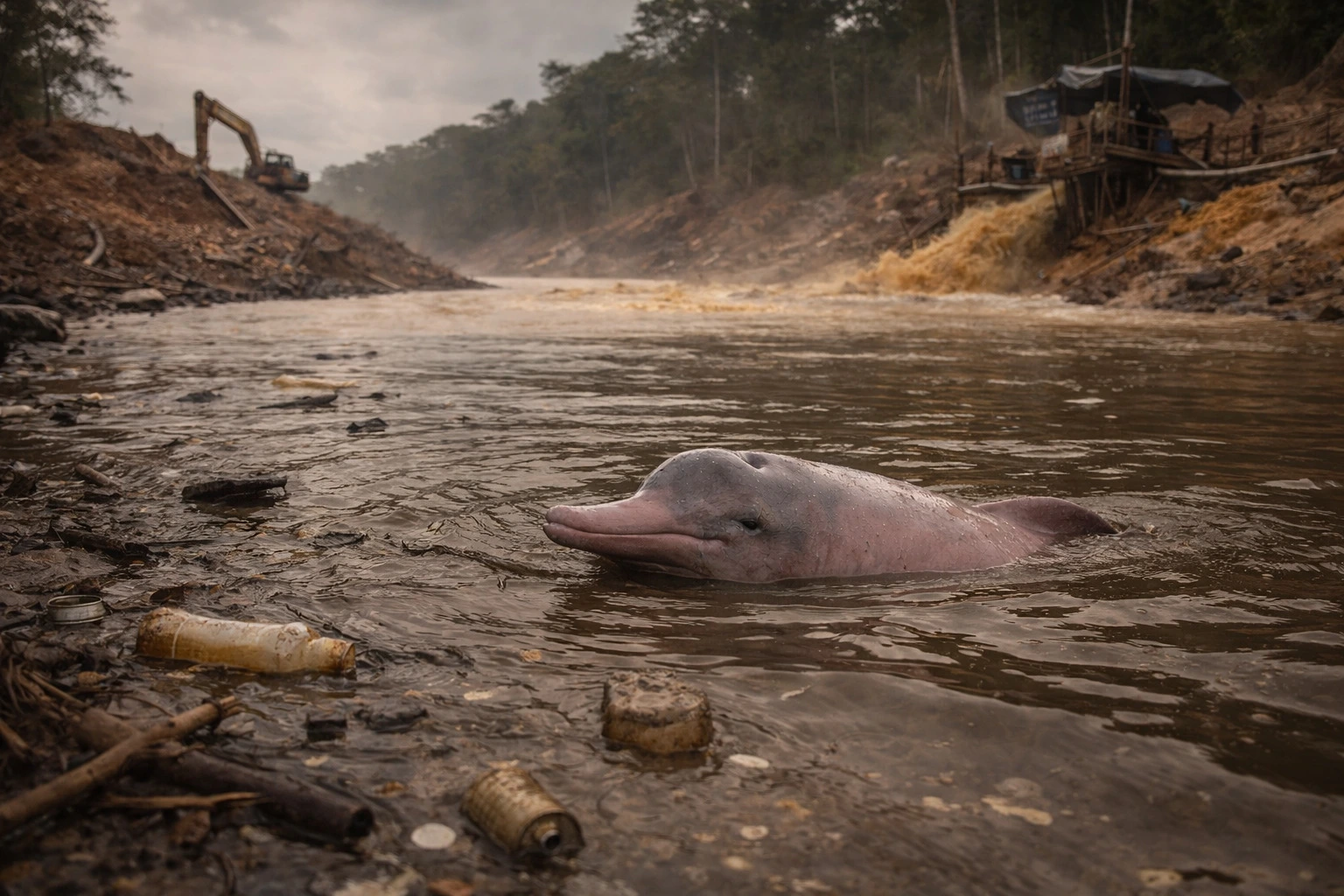
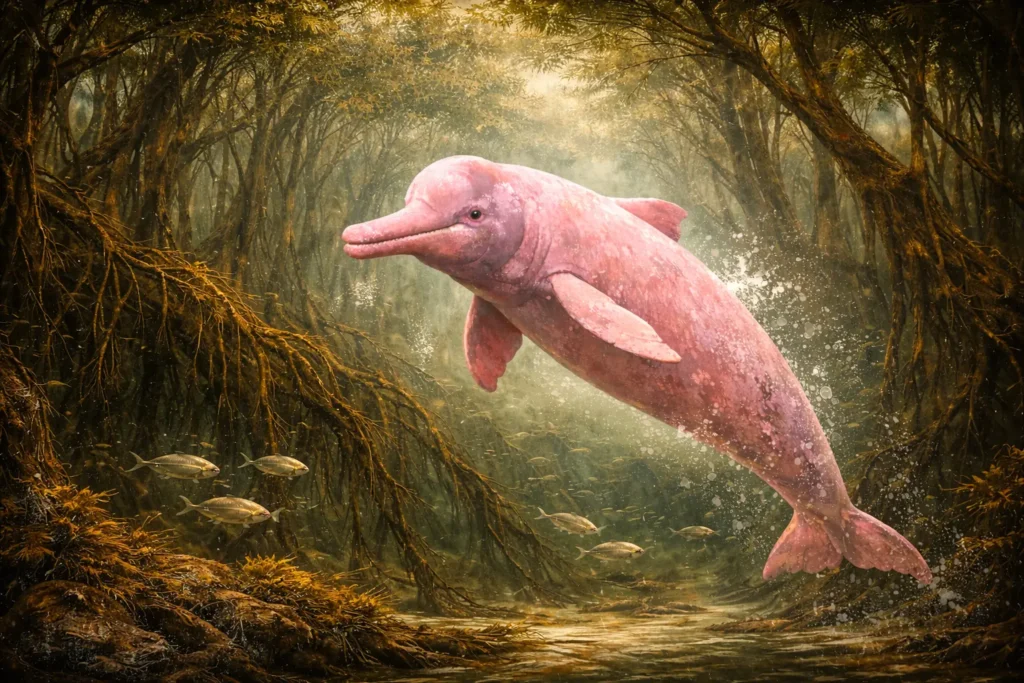
The Amazon Pink Dolphin, also known as the Boto, is one of the most mysterious freshwater mammals living in the tea-colored waters of the Amazon River. In the deep, tea-colored waters of the Amazon, lives a creature that feels like it belongs in a fairy tale. The Amazon River Dolphin (also known as the Boto) is world-famous for its striking pink color and its ability to swim through flooded forests. But today, this “Pink Enigma” is at the center of a severe environmental crisis.
While most people know that these dolphins are in trouble, very few understand the complex web of reasons behind their decline. To save them, we must look beyond the surface and explore the hidden threats in the Amazon basin.
Evolution and Unique Biology: A Master of the Forest
The Boto (Inia geoffrensis) is not just a “pink ocean dolphin.” It has evolved separately for millions of years to survive in a freshwater environment.
- Flexible Necks: Unlike ocean dolphins, Botos have unfused neck vertebrae, allowing them to turn their heads 90 degrees to navigate between submerged tree trunks.
- Sonar Precision: They possess a highly advanced echolocation system to hunt in murky, zero-visibility waters where traditional sight is useless.
- The Pink Color: Their color is actually scar tissue. As they age, they get more “pink” due to repeated play-fighting and interaction, making the oldest males the pinkest of all.
The Mercury Trap: The Cost of Illegal Gold
The most silent and deadly threat comes from the “Gold Rush” in the Amazon.
- Chemical Poisoning: Illegal miners use mercury to extract gold. This mercury is dumped into the rivers, where it enters the food chain through a process called Bioaccumulation.
- Top of the Chain: As apex predators, pink dolphins eat large amounts of contaminated fish. By the time the toxins reach the dolphin, the mercury concentration is high enough to cause brain damage and reproductive failure.
The “Wall” Effect: How Dams Are Killing Diversity
The construction of hydroelectric dams is physically “breaking” the Amazon.
- Genetic Isolation: Dams act as underwater walls. They trap groups of dolphins in small sections of the river, preventing them from meeting other groups. This leads to inbreeding, which weakens the species over time.
- Food Scarcity: Dams block the migration of fish. When the fish can’t move, the dolphins starve or are forced into dangerous areas near human dams and machinery.
The Climate Connection: Boiling Rivers
Climate change is no longer a theory; it is a death trap for the Boto. In recent years, the Amazon has faced extreme droughts.
- The Lake Tefé Tragedy: In late 2023, more than 150 dolphins died in a single week in Lake Tefé. The reason? The water level dropped so low that the sun heated the water to 39°C (102°F)—effectively “cooking” the animals in their own habitat.
Cultural Conflict: The Boto as a “Rival”
In local Amazonian mythology, the Boto is a shape-shifter that can turn into a handsome man. While this myth once protected them, modern economic pressure has changed things.
- Competition for Fish: Overfishing has left rivers empty. Fishermen now see dolphins as rivals that tear their nets.
- The Bait Crisis: Tragically, some dolphins are killed to be used as bait for Piracatinga (a type of catfish), creating a bloody and illegal trade.
The “River vs. Ocean” Comparison (Data Table)
AdSense loves data tables because they provide quick, structured information.
| Feature | Amazon Pink Dolphin (Boto) | Bottlenose (Ocean) Dolphin |
| Habitat | Freshwater Rivers & Flooded Forests | Saltwater Oceans & Coasts |
| Neck | Highly Flexible (Unfused vertebrae) | Rigid (Fused vertebrae) |
| Sight | Small eyes, relies on Sonar | Excellent vision |
| Color | Pink (Gray when young) | Gray/Blue |
| Conservation Status | Endangered | Least Concern |
The Path to Recovery: What Can Be Done?
Saving the Pink Dolphin requires a global shift in how we treat the “Lungs of the Planet”:
- Mercury-Free Mining: Implementing international bans on mercury trade for small-scale mining.
- Dolphin Sanctuaries: Creating “No-Dam” zones in critical biodiversity hotspots.
- Eco-Tourism: Helping local fishermen earn money through dolphin-watching rather than killing them for bait.
Final Conclusion
The Pink Dolphin is a biological treasure and a symbol of the Amazon’s health. Their struggle is a reflection of our own failure to balance progress with nature. If the Boto fades away, it won’t just be the loss of a species—it will be the death of the river’s soul. By choosing sustainable energy and protecting river flows today, we can ensure that future generations still get to see the “Pink Enigma” dancing through the forest.