Winter has always been a season of cold winds and falling snow, but in recent years, winter has started to behave differently. Across the globe, countries are witnessing unexpected, intense, and prolonged snowfall, forcing governments to issue high winter alerts. What was once considered normal seasonal weather is now turning into a “Global Winter Emergency“ .
This winter, snow is not limited to high mountains or polar regions. It is affecting major cities, transport systems, wildlife habitats, and human livelihoods across continents.
A Worldwide Winter Phenomenon
From North America to Asia, and Europe to the Southern Hemisphere, extreme snowfall events are being reported simultaneously, showing that winter patterns are no longer regional — they are global.
North America: Snowstorms at Historic Levels
In United States, Mexico and Canada, powerful blizzards have dumped massive amounts of snow within short periods.
- Major highways buried under snow
- Airports shut down due to zero visibility
- Power lines collapsing under ice weight
Meteorologists warn that such storms are becoming stronger and more frequent, fueled by warmer oceans supplying extra moisture to cold air systems.
Europe: Arctic Air Moves South
Large parts of Europe, including Germany, France, and United Kingdom, are facing unusual cold waves.
- Snowfall in regions that rarely see snow
- Frozen rivers and icy roads
- Emergency shelters opened for homeless populations
Experts note that weakening jet streams are allowing Arctic air to dip much further south than normal.
Asia: Mountains and Cities Under Snow Alert
In Asia, intense snowfall has been recorded in China, Japan, and northern regions of India.
- Himalayan areas cut off for days
- Snowstorms disrupting rail and road transport
- Tourism and local economies severely impacted
Even cities accustomed to mild winters are facing cold stress and infrastructure challenges.
Russia: Epicenter of Extreme Winter Conditions
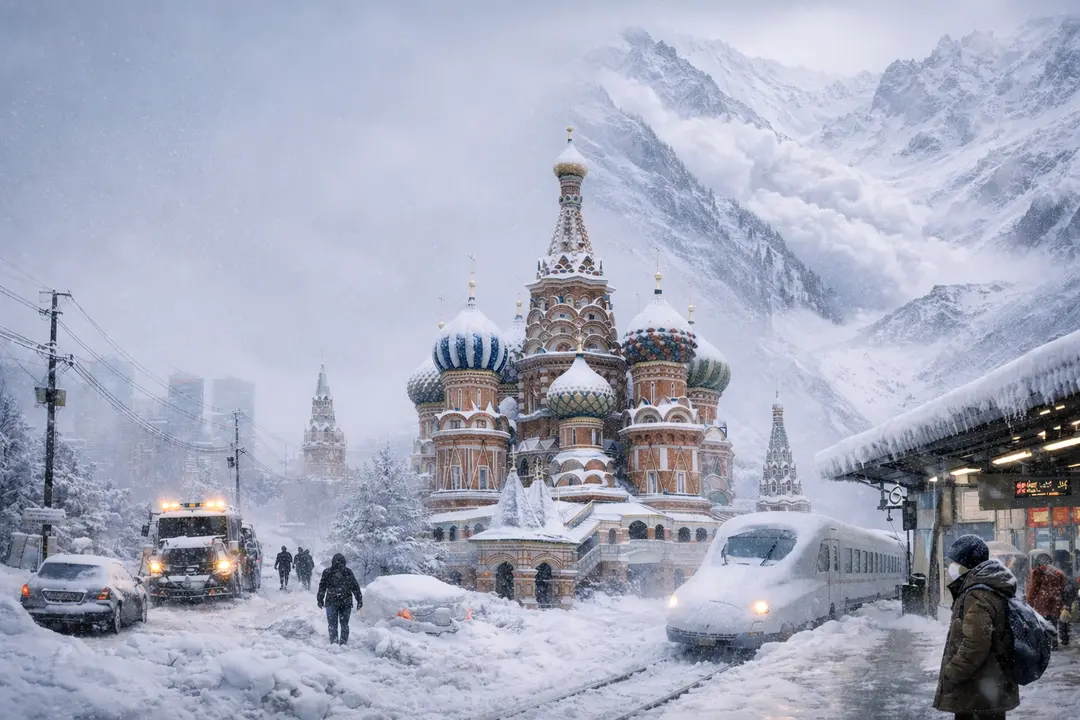
In Russia, winter has arrived with exceptional force, especially across Siberia and northern regions.
- Temperatures plunging far below seasonal averages
- Continuous heavy snowfall burying roads and railways
- Remote villages cut off for weeks
- Increased pressure on energy and heating systems
Siberian regions are witnessing deep snow accumulation, making transportation nearly impossible. Environmental scientists warn that permafrost instability, combined with heavy snow cover, could cause long-term land and ecosystem damage.
Southern Hemisphere: Unexpected Cold Extremes
Parts of Chile and Argentina have reported snowfall beyond seasonal norms, highlighting how global climate systems are interconnected.
Why Is the World Seeing So Much Snow?
Scientists explain that climate change does not mean less winter — it often means more extreme winter events.
Key reasons include:
- Warmer oceans → more moisture in the atmosphere
- Polar vortex instability → sudden cold air outbreaks
- Jet stream disruption → slower-moving storms
- Rapid temperature shifts → heavier snowfall instead of light snow
When warm, moisture-rich air collides with freezing temperatures, it results in intense snowstorms.
Why Is This Winter So Extreme?
Climate experts agree that climate change is reshaping winter behavior, not eliminating it.
Key contributing factors include:
- Polar vortex weakening and sudden shifts
- Jet stream disruptions allowing cold air to spread
- Warmer oceans increasing snowfall intensity
- Rapid temperature contrasts
When moisture-rich air meets extreme cold, it results in heavier and longer-lasting snowstorms.
High Alert: Environmental & Human Impact
Heavy snowfall affects far more than daily life.
Environmental Impact
- Wildlife struggling to access food
- Forest ecosystems under snow pressure
- Delayed plant growth cycles
- Increased risk of avalanches and landslides
Human Impact
- Transport paralysis
- Economic losses
- Health risks like hypothermia
- Rural communities isolated for days
Snow may look beautiful, but prolonged and intense snowfall becomes destructive.
Conclusion “Global Winter Emergency”
The current wave of worldwide snowfall is not just a weather story — it is an environmental warning. As winters grow harsher and more unpredictable, preparedness, climate research, and sustainable action become essential.