South Korea has taken a historic and landmark step in wildlife protection by announcing a complete bans bear farming and bile extraction, effective January 1, 2026. The decision places the country among global leaders in animal welfare reform and signals a major shift in how wildlife exploitation is addressed through law and public policy.
This decision to bans bear farming and bile extraction aligns with global efforts to protect wildlife.
Under a revised animal rights protection law confirmed by the government of South Korea, it will become illegal to breed, possess, or trade bears for bile farming. Violators will face strict criminal penalties, including prison sentences ranging from two to five years. Authorities say the ban reflects growing public concern over animal cruelty, biodiversity loss, and the ethical treatment of wildlife.
A Cruel Industry Comes to an End
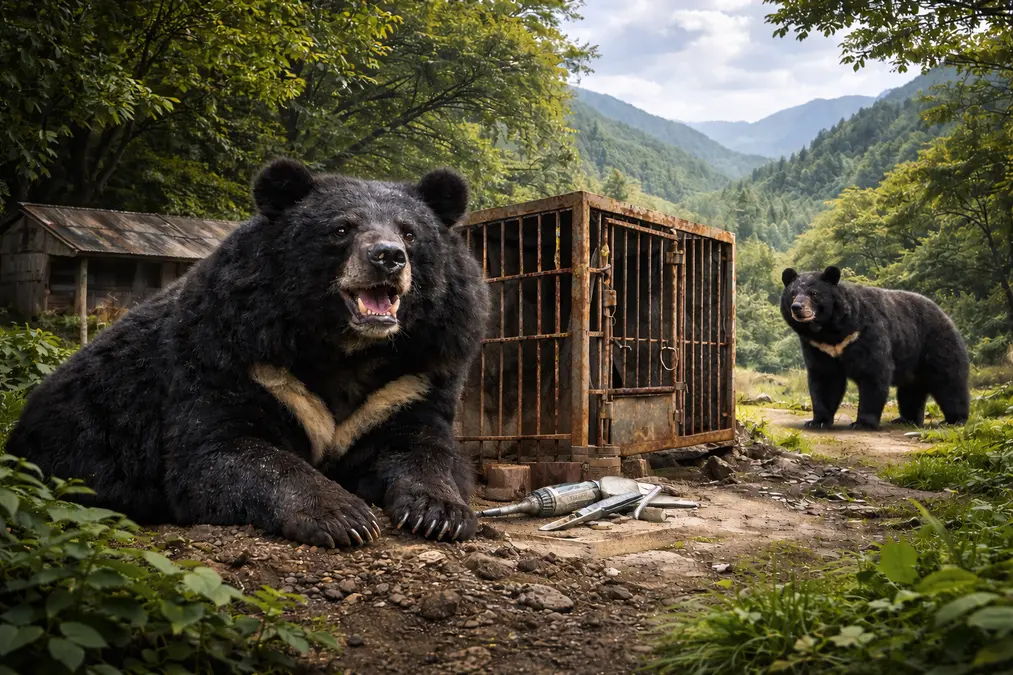
For decades, South Korea was one of the few countries in the world where bears—mainly Asiatic black bear, also known as moon bears—were kept in captivity for bile extraction. Bear bile, a fluid taken from the gallbladder, has long been used in traditional medicine, believed to treat inflammation, liver disease, and other ailments.
Animal welfare groups and scientists have consistently criticized the practice as inhumane. Bears were often confined to small steel cages for years, unable to move freely, while bile was extracted through painful and repeated procedures. Investigations revealed severe physical suffering and psychological stress, with many animals showing signs of injury, infection, and abnormal behavior.
This public outcry for the bans bear farming and bile extraction has been a long time coming.
As awareness grew, public opinion increasingly turned against the industry, leading to mounting pressure on the government to take decisive action.
The impact of the bans bear farming and bile extraction law will be monitored closely by various stakeholders.
The international community is watching how South Korea implements the bans bear farming and bile extraction policy.
Many hope this bans bear farming and bile extraction initiative will inspire similar reforms worldwide.
Ensuring the success of bans bear farming and bile extraction is crucial for future wildlife legislation.
South Korea Bans Bear Farming and Bile Extraction
The new ban did not come overnight. It is the result of a broader 2022 agreement between the South Korean government, bear farmers, and animal rights organizations to completely phase out the industry by 2026. This agreement laid the foundation for legal reform, compensation frameworks, and long-term rehabilitation plans for captive bears.
As of 2025, around 200 bears reportedly remain on 11 farms across the country. To ensure a smooth transition, the government has granted a six-month grace period allowing farmers to sell or relocate bears to sanctuaries, zoos, or conservation facilities approved by wildlife authorities. Financial support and logistical assistance will be provided during this phase, while animal welfare groups continue to help with relocation and rehabilitation efforts.
Officials emphasize that the goal is not only to end the industry but also to ensure the rescued bears are given humane living conditions for the rest of their lives.
Changing Attitudes and Medical Alternatives
Experts agree that the bans bear farming and bile extraction will have significant ecological benefits.
The decline of bear bile use in South Korea has been driven by multiple factors. Over the past two decades, demand has dropped sharply due to increased public awareness of animal cruelty and growing scientific skepticism about the medical effectiveness of bile.
At the same time, synthetic alternatives and plant-based substitutes have become widely available, offering safer and cruelty-free options for patients. Medical professionals and policymakers now increasingly support these alternatives, weakening the economic justification for continuing bile farming.
This cultural and scientific shift played a critical role in making the ban politically possible.
Why This Ban Matters for Biodiversity and the Planet
The significance of South Korea’s decision extends far beyond national borders. Asiatic black bears are considered vulnerable due to habitat loss, poaching, and illegal wildlife trade. Ending bile farming removes one source of exploitation and contributes directly to species conservation.
Bears are also keystone species, meaning they play a vital role in maintaining healthy ecosystems. Through seed dispersal, soil disturbance, and regulating prey populations, bears help shape forest biodiversity. Protecting them supports broader ecological balance and resilience.
Globally, the ban sends a strong message that cruel wildlife industries can be phased out through policy, cooperation, and public support. Conservationists hope it will influence countries like China, where an estimated 20,000 bears are still kept on bile farms, to reconsider similar practices.
The global impact of the bans bear farming and bile extraction will unfold over the coming years.
What Conservation Groups Are Saying
International animal welfare organizations have responded to South Korea’s ban with measured but genuine optimism.
Public education will be essential in supporting the bans bear farming and bile extraction.
Groups that have worked on this issue for decades note that similar bans have been achieved in other countries — Taiwan banned bear farming in the 1990s, and Vietnam has seen significant reductions through a combination of law and demand reduction campaigns. South Korea represents the most recent and, in terms of legal framework, one of the most comprehensive examples.
The legal framework for the bans bear farming and bile extraction is designed to be comprehensive.
South Korea is now a model for countries pursuing bans bear farming and bile extraction.
The consensus among conservation advocates is that the ban is a meaningful step — and that its significance will ultimately be determined by the quality of implementation, particularly the welfare outcomes for the bears currently on farms.
A Step Toward a More Humane Future
South Korea’s ban on bear farming and bile extraction represents a major advance for animal welfare, environmental ethics, and biodiversity protection. It closes a painful chapter in wildlife exploitation and demonstrates how laws can evolve alongside public values and scientific understanding.
The bans bear farming and bile extraction policy is seen as a pivotal moment in animal rights.
As more countries face the realities of biodiversity loss and ethical responsibility, this decision stands as a hopeful example. It proves that progress is possible—and that compassion, when backed by policy, can reshape the future for wildlife worldwide.
Reactions from other countries regarding the bans bear farming and bile extraction will be telling.
Frequently Asked Questions
Q: When exactly does South Korea’s bear farming ban take effect?
The ban takes effect on January 1, 2026, under South Korea’s revised Animal Protection Act. A six-month grace period follows during which farmers can legally relocate bears to approved facilities without facing criminal penalties.
Q: What happens to bears currently on South Korean farms?
Approximately 200 bears on 11 remaining farms will be relocated to approved sanctuaries, zoos, or conservation facilities. The government is providing financial support and logistical assistance during the transition. Animal welfare organizations are involved in assessing animals and preparing receiving facilities.
Q: Is bear bile actually medically effective?
The active compound in bear bile, ursodeoxycholic acid (UDCA), is used in modern pharmaceutical treatments for certain liver and gallbladder conditions. However, UDCA can now be synthesized from non-animal sources and is chemically identical to the animal-derived compound. There is no medical justification for continuing to source it from bears.
Q: Does this ban affect wild bears in South Korea?
The ban specifically targets farming operations — captive bears kept for bile extraction. Wild bear populations in South Korea are small and separately protected under existing wildlife law. The ban removes one source of pressure on the broader species, including wild populations across Asia.
Q: Will South Korea’s ban influence other countries with bear farms?
Conservationists hope the successful implementation of the ban will demonstrate to countries like China and Vietnam that phasing out bile farming is practically achievable. Whether it translates into policy change in those countries depends on local political, cultural, and economic factors — but the precedent strengthens the case advocates make in those contexts.