Glaciers across the world are melting at an unprecedented rate, raising serious concerns among scientists and environmental agencies about the future of Earth’s climate, freshwater systems, wildlife, and biodiversity. Once considered permanent features of the planet, glaciers are now shrinking rapidly due to rising global temperatures linked to climate change.
Experts warn that continued glacier loss could trigger long-term environmental and humanitarian crises.
Glaciers: Earth’s Frozen Lifelines
Glaciers are massive bodies of ice formed over thousands of years. They act as natural freshwater reservoirs, storing nearly 70 percent of the planet’s freshwater. From the Himalayas to the Arctic and Antarctica, glaciers feed some of the world’s most important river systems.
Millions of people depend on glacier-fed rivers for drinking water, farming, and electricity generation. Scientists caution that the disappearance of glaciers could severely disrupt these essential resources.
Accelerating Melting Raises Global Alarm
Recent scientific assessments show that glaciers are melting faster today than at any point in recorded history. Rising temperatures reduce snow accumulation while increasing ice loss during warmer seasons.
This rapid melting has already led to:
- Rising sea levels threatening coastal cities
- Increased risk of floods and landslides
- Unpredictable river flows affecting agriculture
- Long-term water shortages in dry regions
Environmental researchers stress that glacier loss is no longer a distant threat but an ongoing global emergency.
Human Communities on the Frontline of Glacier Loss
Glacier melting is not only an environmental issue—it is a growing humanitarian concern. Communities living in mountain regions and downstream areas are among the first to feel the consequences. As glaciers shrink, short-term flooding increases due to sudden ice melt, followed by long-term water scarcity once glaciers disappear entirely.
Farmers face unpredictable irrigation cycles, hydropower generation becomes unstable, and drinking water supplies decline. In some regions, glacier lake outburst floods pose immediate threats to villages, roads, and infrastructure. Scientists warn that without adaptation and early-warning systems, millions of people could be forced to migrate due to water stress and environmental instability.
Wildlife Faces Habitat Collapse
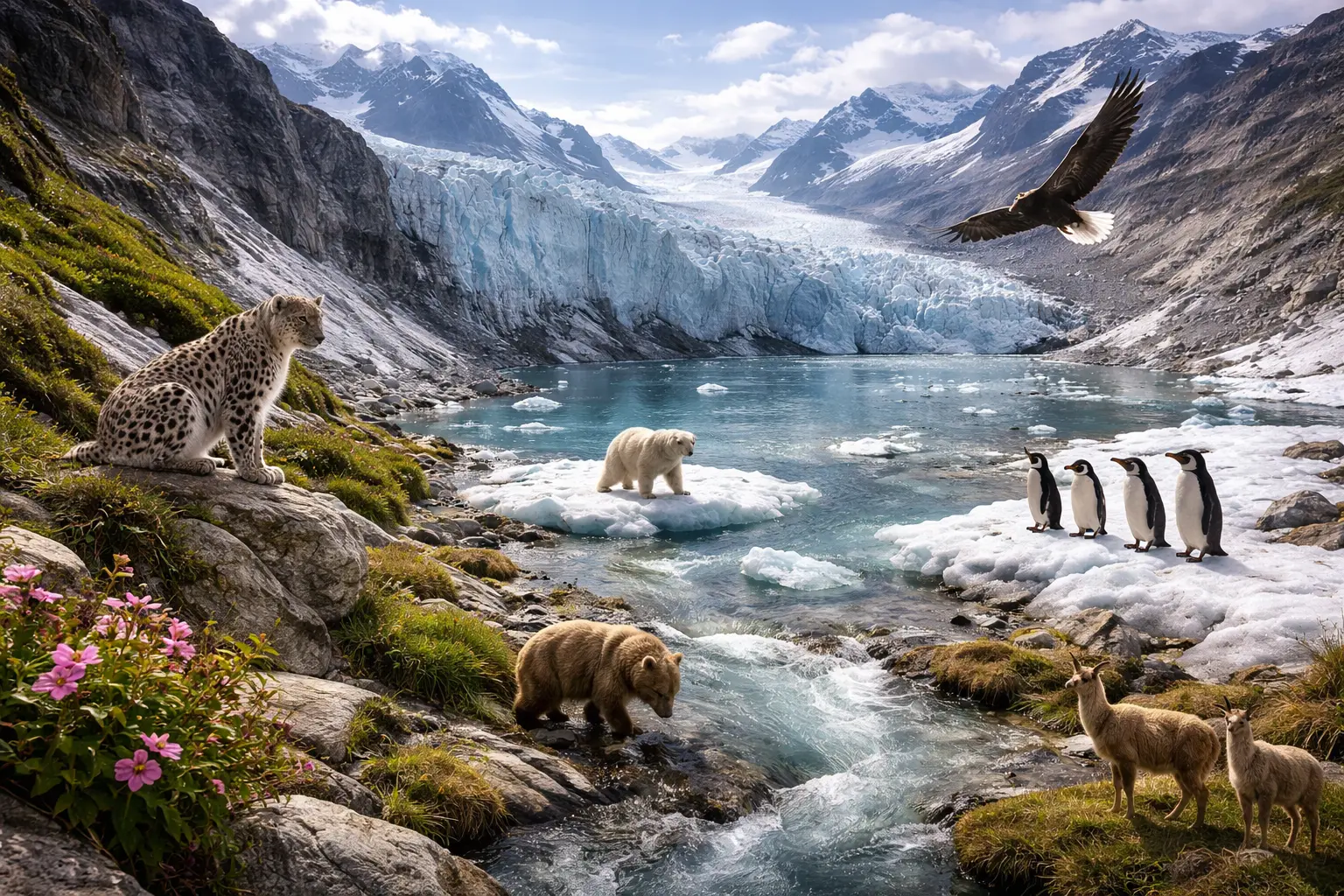
Glaciers and ice-covered landscapes provide critical habitats for numerous species. As ice retreats, wildlife is losing shelter, hunting grounds, and breeding areas.
Species most affected include:
- Polar animals that rely on ice for survival
- Mountain wildlife adapted to cold ecosystems
- Aquatic species dependent on cold, glacier-fed rivers
Conservationists warn that habitat loss caused by glacier retreat could accelerate species extinction rates.
Biodiversity at Risk
Beyond visible wildlife, glaciers support biodiversity in less obvious ways. Cold meltwater sustains river ecosystems, supports alpine vegetation, and regulates seasonal water flow. Sudden glacier collapse can destabilize entire ecosystems, leading to loss of plant species and freshwater life.
Scientists note that glacier-fed ecosystems are among the most sensitive to climate change and may not recover once damaged.
Climate Regulation and Global Impact
Glaciers play a critical role in regulating Earth’s temperature by reflecting sunlight back into space. As ice disappears, darker land and ocean surfaces absorb more heat, further accelerating global warming.
This feedback loop intensifies extreme weather events, including heatwaves, droughts, and heavy rainfall, affecting regions far beyond glacier zones.
Scientists Call for Immediate Action
Climate experts emphasize that reducing greenhouse gas emissions is essential to slow glacier loss. International cooperation, stronger climate policies, and conservation efforts are seen as key steps to prevent irreversible damage.
Environmental groups argue that protecting glaciers is not just about preserving ice but about safeguarding food security, water availability, wildlife, and global stability.
Conclusion
The rapid melting of glaciers represents one of the clearest warnings of a changing planet. Scientists agree that without urgent action, the loss of glaciers will have far-reaching consequences for Earth’s climate, wildlife, and biodiversity. What was once considered a slow natural process has now become a defining environmental crisis of our time.