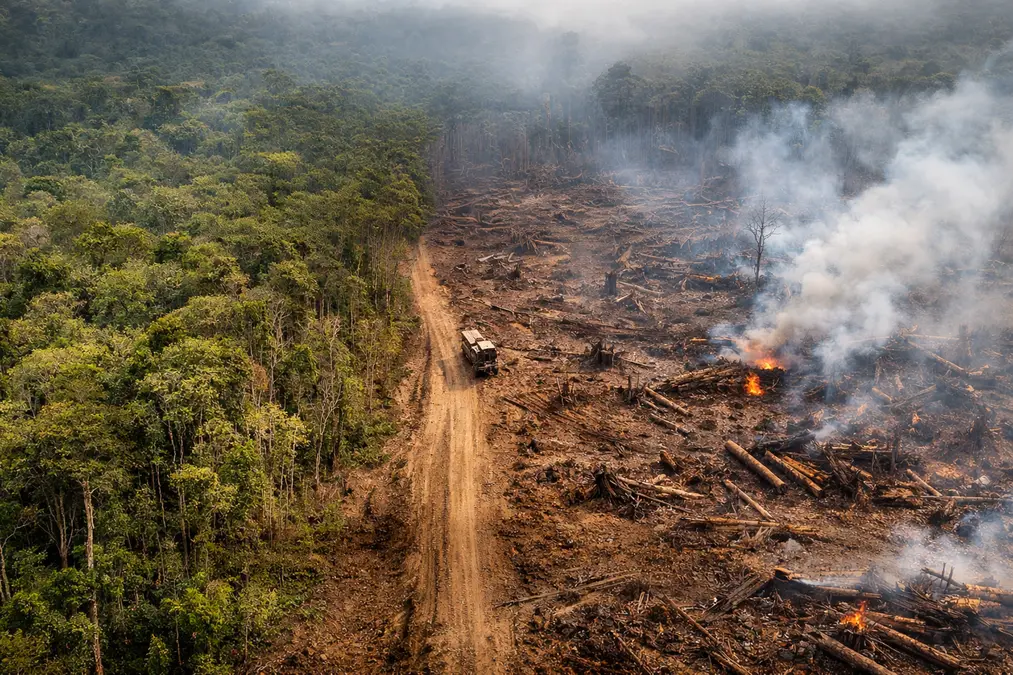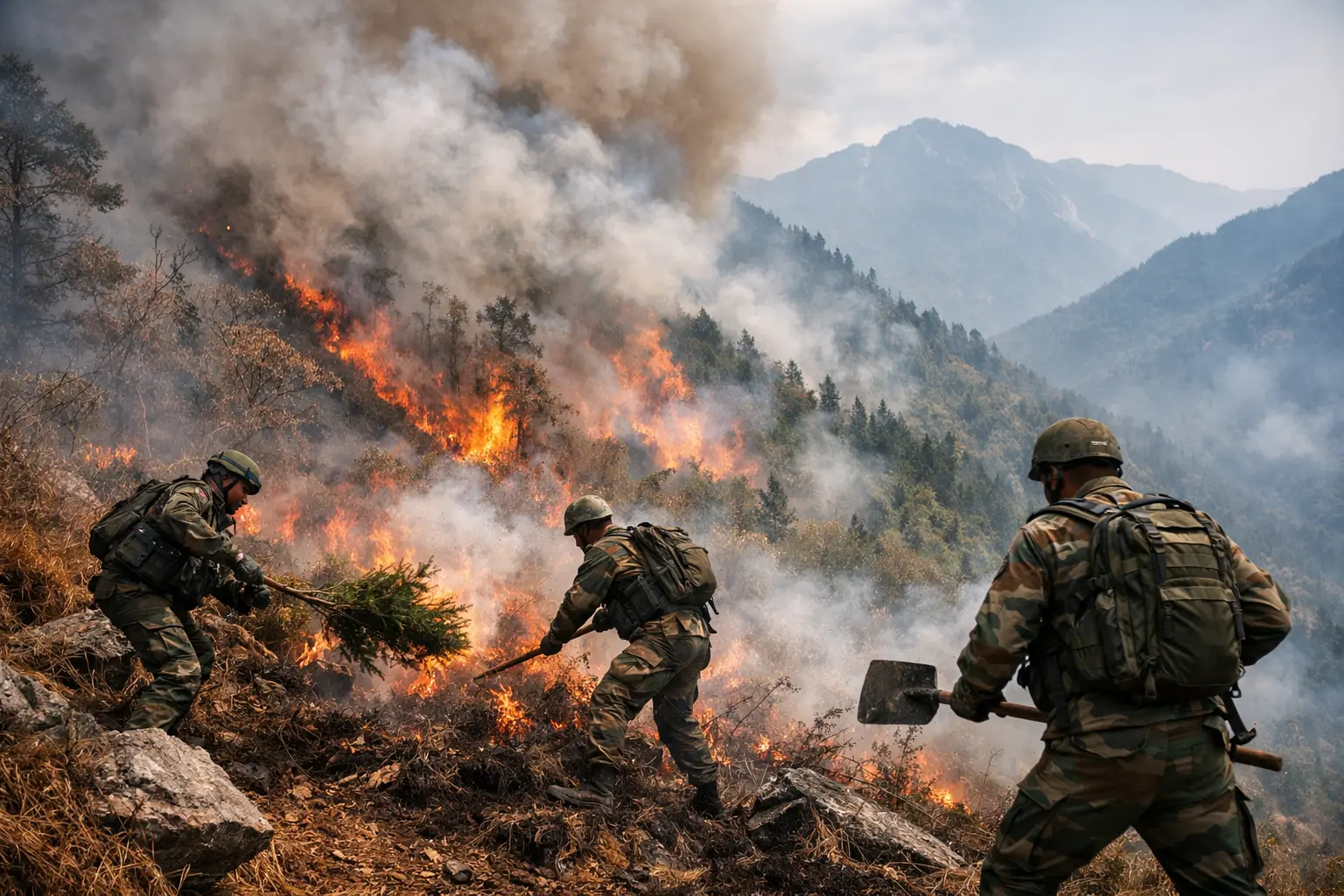
Arunachal Pradesh, India — A forest wildfire that broke out along the sensitive Sino-India border region in Arunachal Pradesh was successfully contained by the Indian Army, preventing further damage to ecologically fragile areas and strategic locations.
When Did the Incident Occur?
According to official sources, the wildfire was reported during the last week of January 2026, between January 27 and January 29, in remote forward areas close to the Sino-India border. Dry weather conditions and strong winds contributed to the rapid spread of flames shortly after the fire was detected.
How Much Area Was Affected?
Preliminary assessments indicate that the wildfire affected approximately 30 to 40 hectares of forest land before containment operations were completed. Authorities clarified that the final figure may be updated after a detailed ground survey by forest officials, as the terrain remains difficult to access.
Army Leads Ground-Based Containment
Due to steep slopes, dense vegetation, and lack of road connectivity, aerial firefighting was not feasible. Indian Army personnel deployed in the forward areas carried out manual firefighting operations, creating firebreaks and clearing dry undergrowth to stop the fire from advancing.
The Army worked in coordination with the local forest department, ensuring the safety of nearby villages, wildlife habitats, and border infrastructure. Officials stated that swift response played a key role in limiting the scale of damage.
No Casualties, Situation Under Control
No civilian or military casualties were reported in the incident. While sections of forest cover were impacted, timely containment helped avoid large-scale ecological loss. Wildlife movement was observed during the fire, but no confirmed animal fatalities have been reported so far.
Rising Concern Over Forest Fires
Forest fires have become increasingly common in northeastern states, including Arunachal Pradesh, particularly during the dry winter months. Experts attribute the rise to prolonged dry spells, climate variability, and human activities such as unattended fires and shifting cultivation practices.
Continued Monitoring
Officials confirmed that although the fire has been contained, continuous monitoring is underway to prevent re-ignition. Firefighting teams remain on alert as dry conditions persist in parts of the region.
The incident once again highlights the Indian Army’s crucial role in disaster response operations, especially in remote and strategically sensitive border areas.