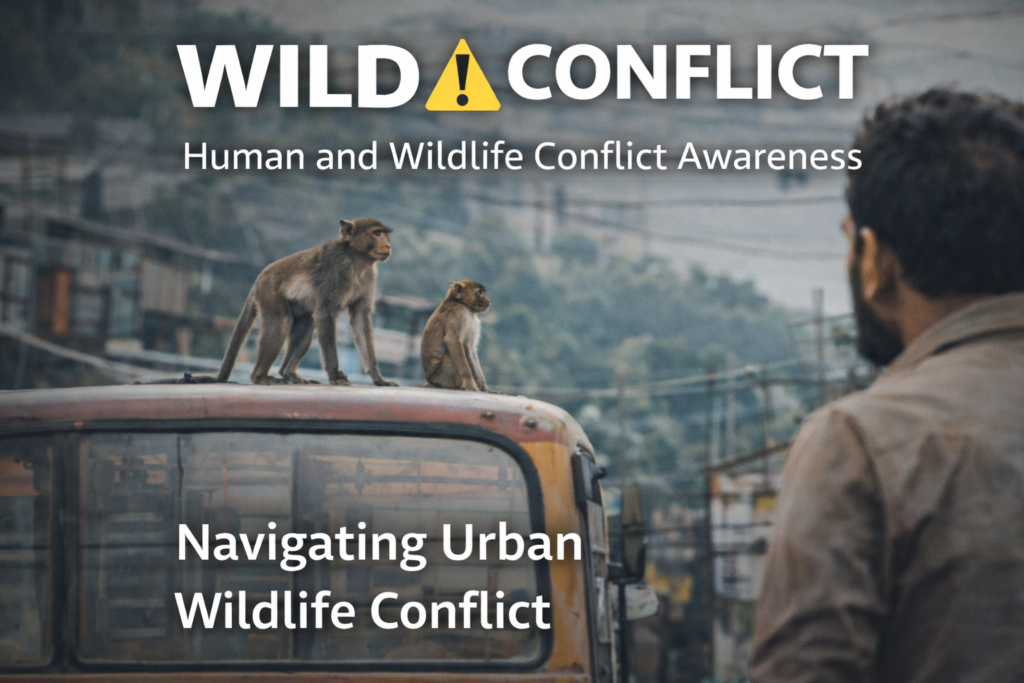
Wild Conflict is an independent awareness platform working at the intersection of human life, wildlife activity, and environmental change. We focus on documenting and explaining the growing conflicts between people and wild animals as human settlements expand closer to forests, coasts, and natural corridors. These encounters are no longer isolated events; they are becoming part of everyday life for many communities across the world. Our work highlights the challenges faced by people living near wildlife habitats—farmers losing crops, families living under constant fear, and livelihoods disrupted by repeated animal activity. At the same time, we examine how wild animals are affected by shrinking habitats, blocked migration routes, and changing ecosystems. Many animals involved in these conflicts are not traditionally viewed as forest wildlife, yet they are forced into human spaces due to environmental pressure and loss of natural resources. At the same time, wild animals are also under pressure. Habitat loss, deforestation, and development projects reduce their natural living space. As a result, animals that were once deep inside forests are now seen closer to human settlements. Some species involved in conflicts are not always considered forest animals by authority classification, yet environmental changes force them into human areas.
Wild Conflict also looks at how these ongoing conflicts affect the environment and natural life cycles. When human and animal spaces overlap, ecosystems become unstable, affecting food chains, migration patterns, and biodiversity. These changes do not only impact the present generation but also shape the future for those who will inherit this shared environment. Wild Conflict also bare how authority classifications, land use policies, and development decisions influence these encounters. From forest-edge villages to coastal regions and shared landscapes, wildlife activity now overlaps closely with human life. These conflicts impact not only the present generation but also shape the future of coexistence for the next.
Wild Conflict also looks at how these ongoing conflicts affect the environment and natural life cycles. When human and animal spaces overlap, ecosystems become unstable, affecting food chains, migration patterns, and biodiversity. These changes do not only impact the present generation but also shape the future for those who will inherit this shared environment.
Wild Conflict also working on practical solutions to reduce human–wildlife conflict. Our focus is on awareness, prevention, and coexistence strategies that help communities live safely alongside wildlife. By sharing information, safety guidance, and responsible practices, we aim to support long-term solutions that protect people, animals, and the environment.
Through factual reporting, environmental awareness, and responsible storytelling, we aim to explain how these conflicts change lives, disrupt natural cycles, and affect the balance of our environment. Our goal is to encourage understanding, informed action, and sustainable solutions that protect both human communities and wildlife, ensuring a healthier world for generations to come.